
Your engagement ring is one of the most meaningful pieces of jewellery you will ever own. Because you wear it through everyday life, it naturally collects oils, dust, soap residue, and tiny particles that block light. When light cannot move freely through the stone, the diamond looks dull, even if the quality is excellent. Learning how to clean diamond rings at home helps you bring back that fresh sparkle without risking your setting.
The best part is you do not need special tools or harsh chemicals. With a simple routine and a few smart habits, you can keep your ring bright, safe, and beautiful for years. This guide explains exactly what to do, what to avoid, and how to care for your ring between professional cleanings.
How To Clean Your Engagement Ring
When people search how to clean their engagement ring, they often want a method that is safe, quick, and effective. A gentle approach is always best because diamonds may be hard, but the metal and prongs can scratch or loosen with rough handling. Your goal is to dissolve oil buildup and lift dirt from under the setting without damaging the craftsmanship.
Most rings lose sparkle because a thin film forms on the diamond surface. This film usually comes from hand lotion, sunscreen, natural skin oils, and soap. Once that layer is removed, the brilliance returns almost instantly, especially in natural daylight.
Safe Home Cleaning Steps
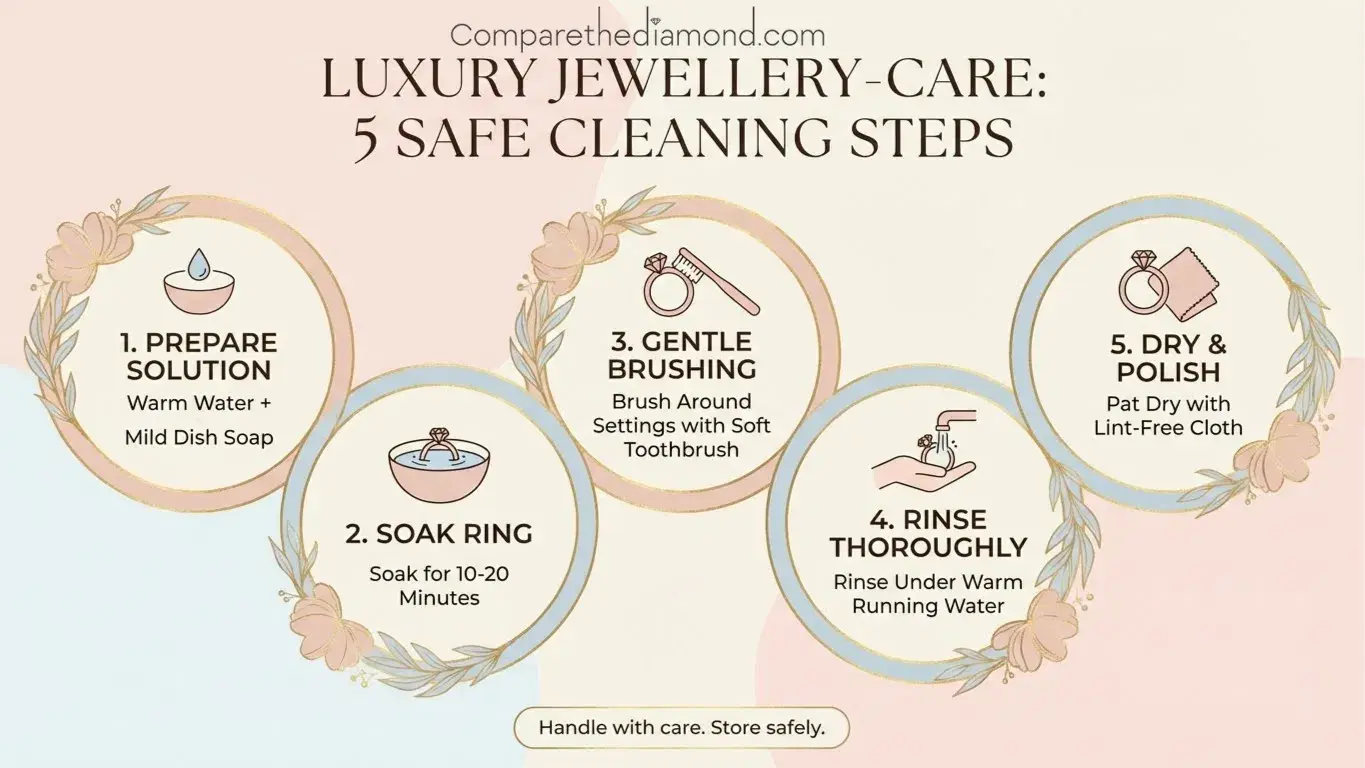
This routine works for most diamond engagement rings, including solitaires, halos, and pavé styles. It is gentle enough for weekly cleaning and strong enough to restore brightness when the ring starts to look cloudy.
- Fill a small bowl with warm water and add a few drops of mild dish soap
- Soak your ring for 20 to 30 minutes so residue loosens naturally
- Use a soft toothbrush to gently clean the underside of the diamond and around the prongs
- Rinse under warm water, using a strainer or closed drain to prevent accidents
- Pat dry with a lint-free cloth, then let it air dry fully before wearing
Keep pressure light while brushing. Your ring does not need force, it needs patience. If your ring has pavé diamonds, brush gently along the metal surface to avoid catching tiny claws.
What to Avoid When Cleaning
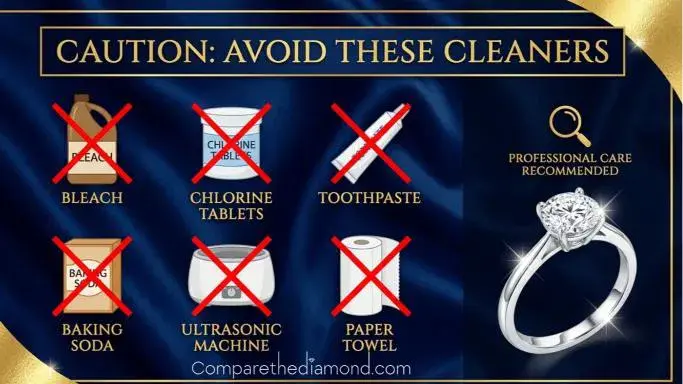
Some cleaning methods spread online can damage jewellery over time. Avoid anything abrasive or chemically strong, because it can weaken metal finishes and reduce shine.
Avoid:
- Bleach, chlorine, and strong household cleaners
- Toothpaste or baking soda scrubs
- Ultrasonic machines at home if your ring has loose stones or delicate pavé
- Paper towels that can create micro-scratches on polished metal
How to Clean a Platinum Diamond Ring
Platinum is naturally hypoallergenic and resistant to tarnish, but its rich, slightly grey-white tone can dull from skin oils and product buildup. The good news: platinum responds exceptionally well to the warm soapy water method above. Over time, platinum also develops a natural surface texture called patina—a softly burnished look that many wearers love. If you prefer a high-polish finish, a jeweller can buff the patina away during professional servicing. Read more about why platinum is the British standard for engagement rings in our UK hallmarking guide.
How to Clean a White Gold Diamond Ring
White gold is yellow gold alloyed with white metals (palladium, silver or nickel) and then rhodium-plated to give it its bright, mirror-white finish. The rhodium plating wears off gradually over 12 to 24 months of daily wear, which is why white gold rings can look slightly more yellow over time—this is normal, not a defect. The same gentle soap-and-water cleaning method works perfectly. Avoid abrasive cloths that can wear the rhodium more quickly, and have your ring re-plated every 18 to 24 months as part of routine professional servicing.
Are Ultrasonic Jewellery Cleaners Safe for Diamond Rings?
Ultrasonic cleaners are popular for a reason—they reach areas that hand cleaning cannot. But they are not safe for every ring. Ultrasonic vibrations can loosen small pavé diamonds, damage older settings, and shatter certain treated stones such as fracture-filled diamonds or emeralds.
Ultrasonic cleaning can be safe for:
- Solitaire diamond rings with secure four-claw or six-claw settings
- Natural, untreated diamonds with no fracture fill
- Solid metal bands without loose stones
Ultrasonic cleaning is not recommended for:
- Pavé or micro-pavé settings
- Older rings where prongs may already be slightly worn
- Treated, fracture-filled or coated diamonds
- Rings set with coloured gemstones such as emeralds, opals, or pearls
If in doubt, hand-clean at home and bring your ring to a jeweller for professional ultrasonic and steam cleaning every 12 to 18 months.
How to Care for Your Diamond Ring
Cleaning is only one part of keeping sparkle. Knowing how to care for a diamond ring means protecting the setting and preventing buildup before it becomes heavy. A diamond can last forever, but prongs and settings can wear down through daily knocks, pressure, and exposure to chemicals.
A strong care routine reduces the risk of loose stones and keeps your ring comfortable. It also protects your investment, because small issues become expensive repairs when ignored.
Daily Habits That Protect Your Ring
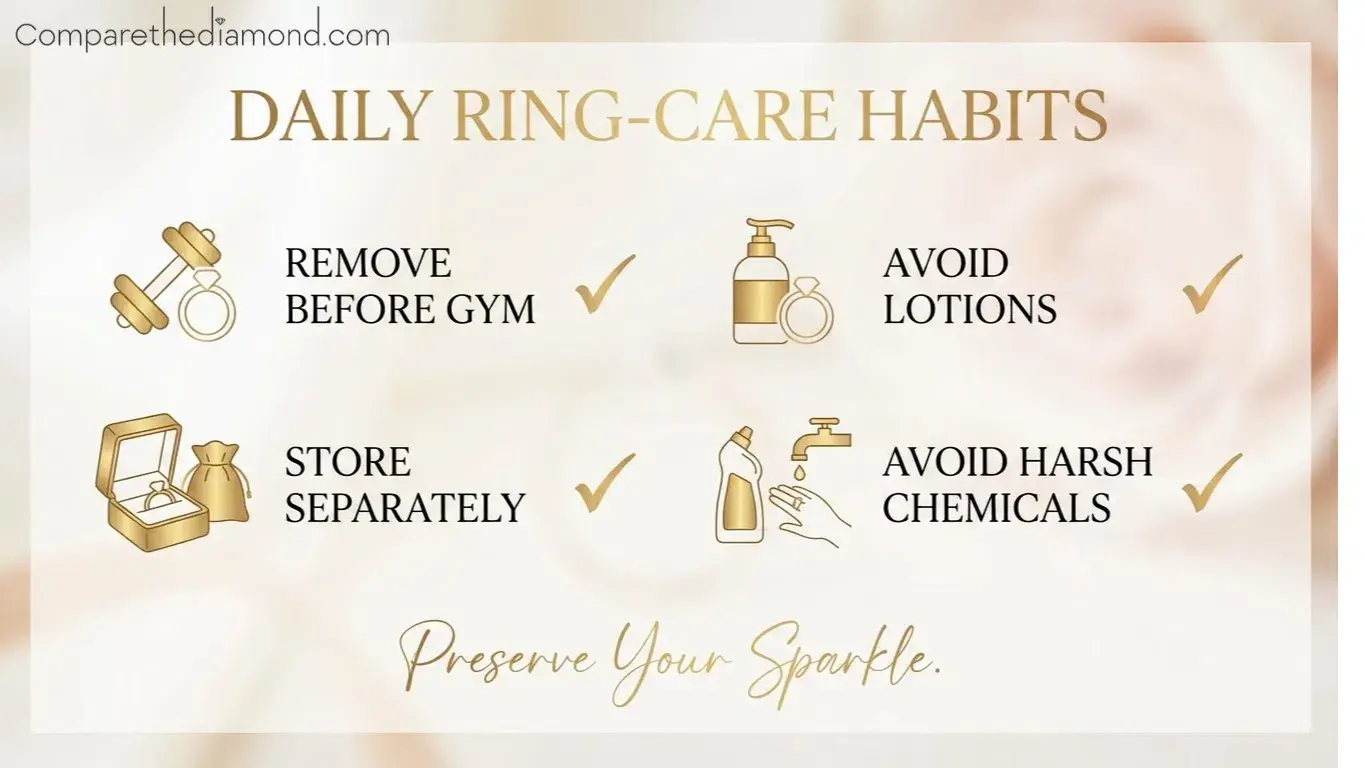
A few simple habits make a huge difference over time. These are easy to follow and they keep your ring looking newer for longer.
- Put your ring on after lotion, perfume, and hair products are fully dry
- Remove it before gym workouts, heavy lifting, gardening, or cleaning
- Keep it away from harsh detergents and chemical sprays
- Store it separately in a soft pouch or jewellery box compartment
If your ring snags on clothing, that can be an early sign a prong is lifting. Catching this early helps you avoid stone loss—and our jewellery makeover and repair service can re-tip worn prongs and re-set loose stones to keep your ring secure for decades.
Storage and Travel Tips
Diamonds can scratch other jewellery, and other jewellery can scratch your metal. Storing properly prevents tiny damage that builds slowly over years.
- Store your ring alone, not mixed with bracelets or chains
- Use a padded jewellery case when travelling
- Keep jewellery in a cool, dry place away from humidity
Time for a Refresh?
If your ring is looking tired or your setting needs attention, our British workshop offers a full jewellery makeover and repair service—professional cleaning, prong re-tipping, rhodium replating, and even complete redesigns. Or commission a brand-new bespoke piece using diamonds from your existing jewellery.
Should I Take My Ring Off When I Shower?
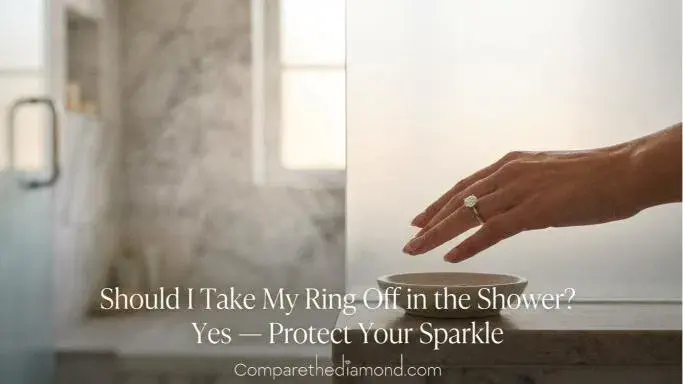
Many people ask whether they should take their ring off when showering, and the safest answer is yes. Diamonds are not damaged by water, but shower products leave residue that dulls the stone. Shampoos and conditioners are especially likely to create buildup on the underside of the diamond, which is the area most important for light return.
There is also the risk of losing your ring. Fingers shrink slightly in cool water, and soap makes skin slippery. Rings can slip off and disappear quickly, especially if drains are open.
Why Showering Affects Sparkle and Safety
Taking your ring off before showering is one of the easiest ways to protect it. It keeps the diamond brighter and reduces risk.
- Soap film creates a cloudy look over time
- Conditioner oils cling to settings and attract dirt
- Wet hands increase the chance of slipping the ring off
A simple routine works well: remove your ring before showering, then wear it after you have dried off and finished skincare.
When to Get Professional Cleaning
Home cleaning keeps your ring bright, but professional maintenance protects the structure. Jewellers can remove deeper buildup and inspect prongs, claws, and settings for wear. This matters because a ring can look fine while the setting slowly weakens.
A professional service is also helpful when your ring has pavé diamonds, halo detailing, or a complex under-gallery that traps dirt. Our team in Bourton-on-the-Water offers complete cleaning, inspection, and makeover services for any ring—whether you bought it from us or not.
A Smart Schedule for Checkups
A good general routine for most wearers is:
- Light home cleaning every 1 to 2 weeks
- Deeper home cleaning once a month
- Professional cleaning and inspection every 12 to 18 months
If you wear your ring daily and use lotion often, more frequent inspections are helpful.
Frequently Asked Questions
What is the best way to clean a diamond ring at home?
The safest and most effective method is to soak the ring for 20–30 minutes in warm water with a few drops of mild dish soap, then gently brush it with a soft toothbrush—paying particular attention to the underside of the stone where most dirt accumulates. Rinse with warm water (over a closed drain) and pat dry with a lint-free cloth.
Can I use toothpaste to clean my diamond ring?
No. Toothpaste is mildly abrasive and can scratch the polish on gold, white gold, and platinum. The same applies to baking soda. Stick to soap and warm water, which removes oil-based buildup without risking the metal.
How often should I clean my diamond engagement ring?
Light cleaning weekly, a deeper soak monthly, and a professional cleaning and inspection every 12 to 18 months. Daily wearers who use hand lotion frequently may benefit from cleaning more often.
Can I shower with my diamond ring on?
You can—diamonds are not damaged by water—but shower products coat the diamond in residue that dulls its sparkle, and wet, soapy fingers increase the chance of the ring slipping off. We recommend removing it before showering.
Is it safe to use an ultrasonic cleaner on a diamond ring?
Sometimes. Ultrasonic cleaners are safe for solid solitaire settings with secure prongs and untreated diamonds, but unsafe for pavé, older settings, treated diamonds, and coloured gemstones. When in doubt, hand-clean at home and book a professional ultrasonic service.
Why does my diamond look dull even after cleaning?
If a thorough soap-and-water clean doesn’t restore sparkle, the issue may be deeper—trapped grime in a complex setting, worn rhodium plating on white gold, or a stone that needs professional steam cleaning. Our makeover service can usually restore even the most tired-looking rings.
How do I know if my prongs are wearing down?
Run your finger gently over the prongs. They should feel rounded, not flat or sharp. If the ring catches on clothing or you can wiggle the stone slightly, book an inspection immediately. Worn prongs are repairable; lost stones are not always replaceable.
Will my white gold ring need re-plating?
Yes, every 12 to 24 months. White gold is rhodium-plated to give it its bright white finish, and the plating wears off gradually with daily wear. Re-plating is a quick, inexpensive professional service that restores the original brilliance.
Final Thoughts
Your engagement ring is more than jewellery. It is a symbol you wear through real life, which means it deserves real care. When you understand how to clean diamond rings at home, you protect the sparkle that makes your diamond feel special. When you learn how to care for your ring, you protect the craftsmanship that holds it safely.
With gentle cleaning, smart daily habits, and occasional professional checks, your ring can stay brilliant for years and remain just as meaningful as the day you first wore it.
Care, Repair & Upgrade Services
| Jewellery Makeover Service Professional cleaning & repair |
Eternity Rings Mark an anniversary |
Bespoke Redesign Refresh tired jewellery |
Design Your Own Free 3D Ring Maker |