
Buying a diamond should feel exciting, not overwhelming. Yet for many people, the moment they start comparing diamonds, confusion sets in. Two stones can look almost identical online but sparkle very differently in real life. Prices vary dramatically even when the carat weight seems the same. And when you’re buying something as meaningful as a diamond, confidence matters.
This guide is designed to help you understand diamonds clearly and practically. You’ll learn what makes diamonds unique, how quality is assessed, which factors truly affect beauty, and how to avoid paying more for things that don’t make a visible difference.
Understanding What Makes Diamonds Unique
Diamonds are formed from carbon, but what makes them special is how those carbon atoms are arranged. This structure gives diamonds their exceptional hardness and durability, making them ideal for everyday jewellery like engagement rings.
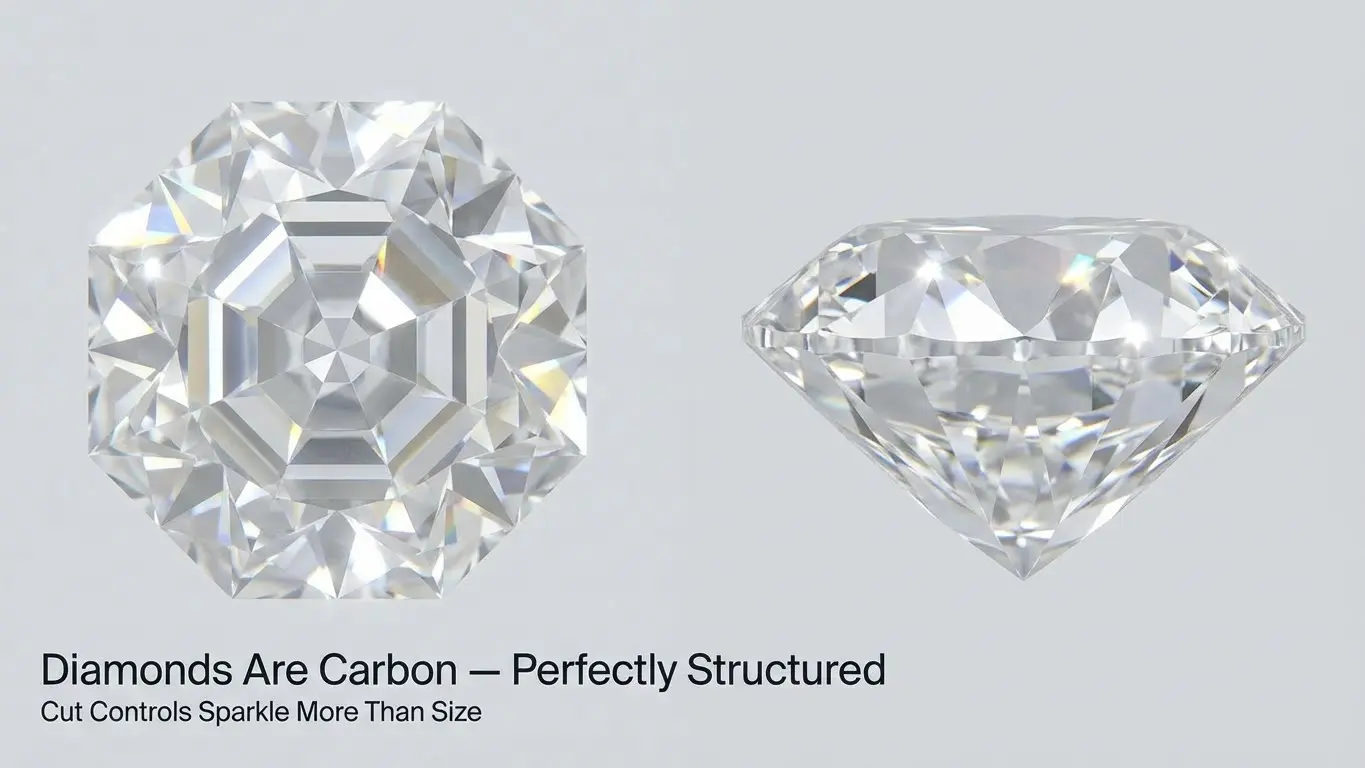
Beyond strength, diamonds are prized for how they interact with light. A well-cut diamond reflects light internally and returns it to the eye as brilliance and sparkle. That visual beauty isn’t automatic. It depends heavily on how the diamond is cut and finished, not just on size or price.
Where Do Diamonds Come From?
Natural diamonds form deep within the Earth under extreme heat and pressure. Over millions of years, volcanic activity carries them closer to the surface, where they can eventually be mined.
For buyers, the key point is simple: diamonds are natural products, and no two are exactly the same. Even diamonds with similar certificates can look different in real life. That’s why understanding grading and visual performance is so important when choosing a stone.
Conflict-Free Diamonds and Ethical Sourcing
Ethical sourcing is an important consideration for many buyers. The diamond industry has faced serious concerns in the past around conflict diamonds, sometimes referred to as blood diamonds, which were linked to funding violence in certain regions.
Today, responsible sellers emphasise transparency and sourcing standards. The Kimberley Process is one of the most widely recognised systems aimed at preventing conflict diamonds from entering the mainstream market. When buying a diamond, it’s always reasonable to ask how it was sourced and what assurances are in place.
Understanding Diamond Quality Without Overcomplicating It
Diamond quality is commonly explained using the 4Cs, but smart buying isn’t about memorising definitions. It’s about knowing which factors actually affect how a diamond looks on the hand and which ones mainly influence price on paper.
Many buyers assume bigger or higher-graded automatically means better. In reality, balance matters more than perfection. Understanding how the Cs work together helps you make confident choices instead of chasing numbers.
The 4Cs Explained in a Buyer-Friendly Way
Diamond Cut: The Key to Sparkle
Cut has the biggest impact on how a diamond looks. It controls how light enters, reflects, and exits the stone, which directly affects brightness, fire, and overall sparkle.
A diamond can have high carat weight and excellent clarity, but if it’s poorly cut, it can still appear dull. On the other hand, a smaller diamond with an excellent cut often looks more impressive because it performs better in real-life lighting.
If you prioritise only one factor, make it cut.
Diamond Colour: What the Eye Really Notices
Diamond colour is graded on a scale, but the difference between neighbouring grades is often subtle. Many diamonds slightly below the top grades still look beautifully white once set, especially depending on the metal and setting style.
This is an area where informed buyers can often find better value. The goal is not the highest colour grade on paper, but a diamond that looks bright and appealing in everyday wear.
Diamond Clarity: Eye-Clean Matters Most
Clarity refers to internal characteristics and surface features. Most inclusions are microscopic and invisible without magnification.
This is why the concept of “eye-clean” is so important. If a diamond looks clean to the naked eye under normal conditions, paying for extremely high clarity grades may not improve how it looks in real life.
Diamond Carat: Weight Versus Appearance
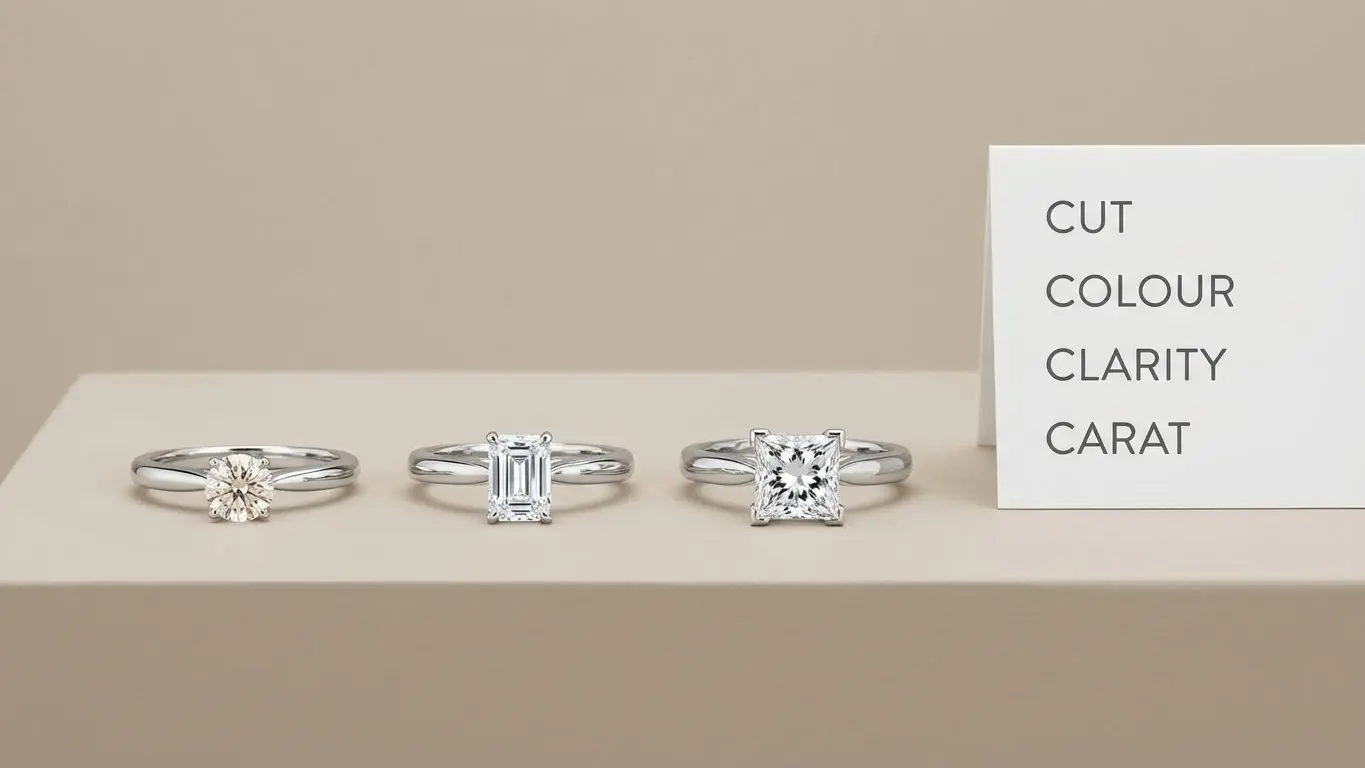
Carat measures weight, not visual size. Two diamonds with the same carat weight can look noticeably different depending on their proportions and cut quality.
A well-cut diamond can appear larger than a heavier diamond with poor proportions. When choosing carat weight, focus on how the diamond looks face-up and how it fits your budget, not just the number on the certificate.
Diamond Certification and Grading
Certification is one of the most important protections for diamond buyers. A grading report documents the diamond’s characteristics and allows you to compare stones accurately.
Certification helps ensure you’re paying for what you’re actually getting, not relying on marketing descriptions. For any significant diamond purchase, buying a certified stone is essential for confidence and transparency.
The Sixth C: Confidence
Beyond cut, colour, clarity, and carat, there is another factor that matters deeply: confidence in the seller.
Confidence comes from clear certification, transparent sourcing, expert guidance, and fair policies. A trustworthy jeweller educates rather than pressures and helps you understand your options instead of rushing decisions.
When you buy a diamond, you’re not just buying a stone. You’re buying reassurance that it is exactly what it’s claimed to be.
Other Diamond Factors Worth Knowing
Some characteristics don’t fit neatly into the 4Cs but can still influence appearance and satisfaction.
Fluorescence
Fluorescence refers to how a diamond reacts under certain lighting conditions. In many cases it has little to no visible effect, but in some stones it can subtly change appearance. It’s worth checking on the certificate and viewing the diamond in normal lighting.
Symmetry and Light Performance
Highly precise cutting can improve symmetry and light return. In round diamonds, this is sometimes associated with patterns known as hearts and arrows. While not essential, strong symmetry can be appealing to buyers who value crisp sparkle and craftsmanship.
A Simple, Practical Way to Choose a Diamond
If you want a clear approach that avoids overthinking, focus on these principles:
• Prioritise cut quality for maximum sparkle
• Choose a colour that looks white in your chosen setting
• Select a clarity that is eye-clean
• Pick carat based on visual appeal and budget
• Always buy certified diamonds from a trusted source
This method keeps the decision practical, balanced, and stress-free.
Final Thoughts
Understanding what a diamond is and how quality works removes much of the uncertainty from buying. The best diamond isn’t the one with the highest numbers on paper. It’s the one that looks beautiful in real life, fits your budget, and comes with proper certification and confidence behind it.
At CompareTheDiamond.com, education comes first. When you know what to look for, choosing the right diamond becomes an enjoyable experience rather than a confusing one.