
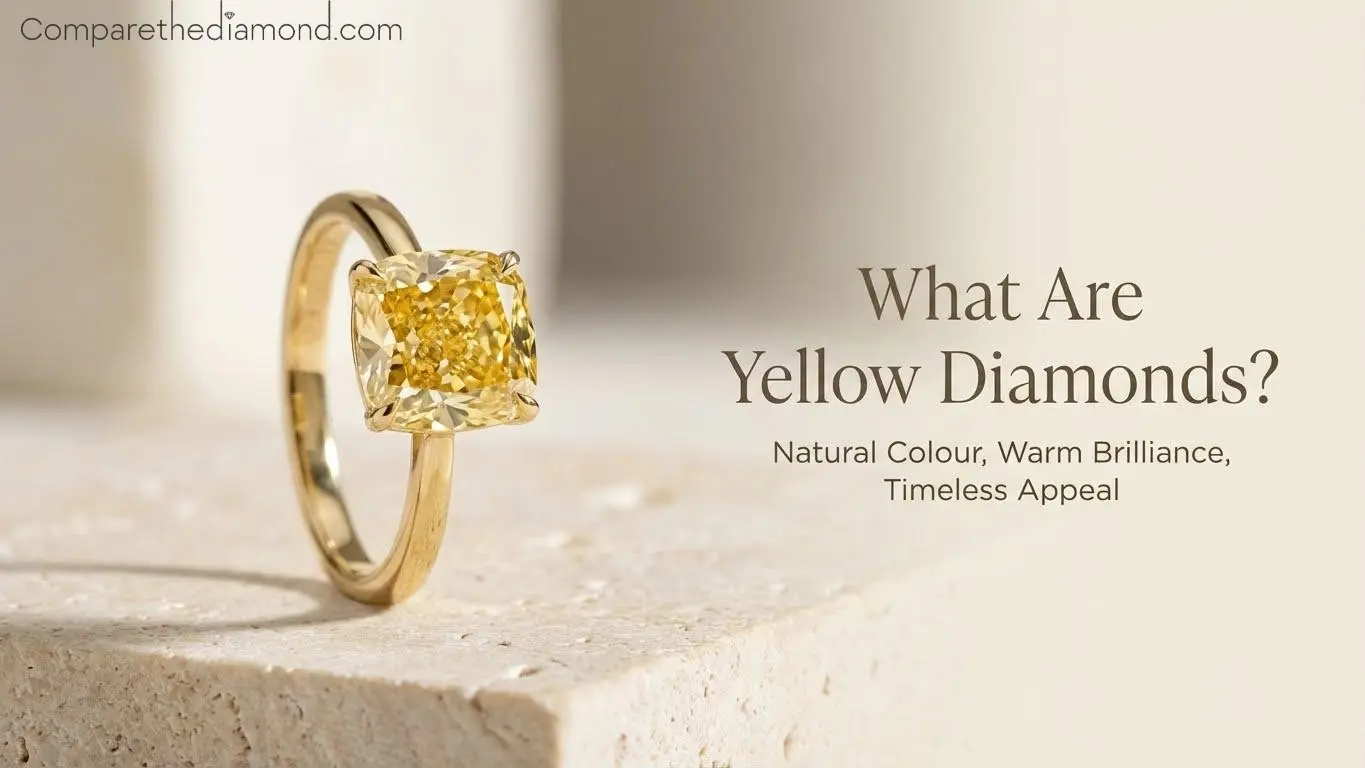
Yellow diamonds, commonly known as canary diamonds, are real diamonds that display a natural yellow colour ranging from soft pastel tones to rich, vivid gold. Unlike white diamonds, which are judged on how little colour they show, yellow diamonds are admired for the presence and strength of their colour. The richer and purer the yellow appears, the more eye-catching the diamond becomes.
For many buyers, yellow diamonds offer the perfect balance between tradition and individuality. You still get the durability and prestige of a diamond, but with a warmer, more expressive look that stands out instantly.
Are Yellow Diamonds Real and Natural?
Yes, yellow diamonds are completely real. They are formed in the same way as white diamonds, under extreme heat and pressure deep within the earth. The only difference is that yellow diamonds contain natural trace elements that influence their colour.
Most yellow diamonds available today are natural diamonds, mined from the earth and graded by recognised laboratories such as GIA. Lab-grown yellow diamonds are also available and are chemically identical, but formed in controlled environments. To the naked eye, both can look equally beautiful, which is why certification is important when understanding origin and value.
What Makes Diamonds Yellow?
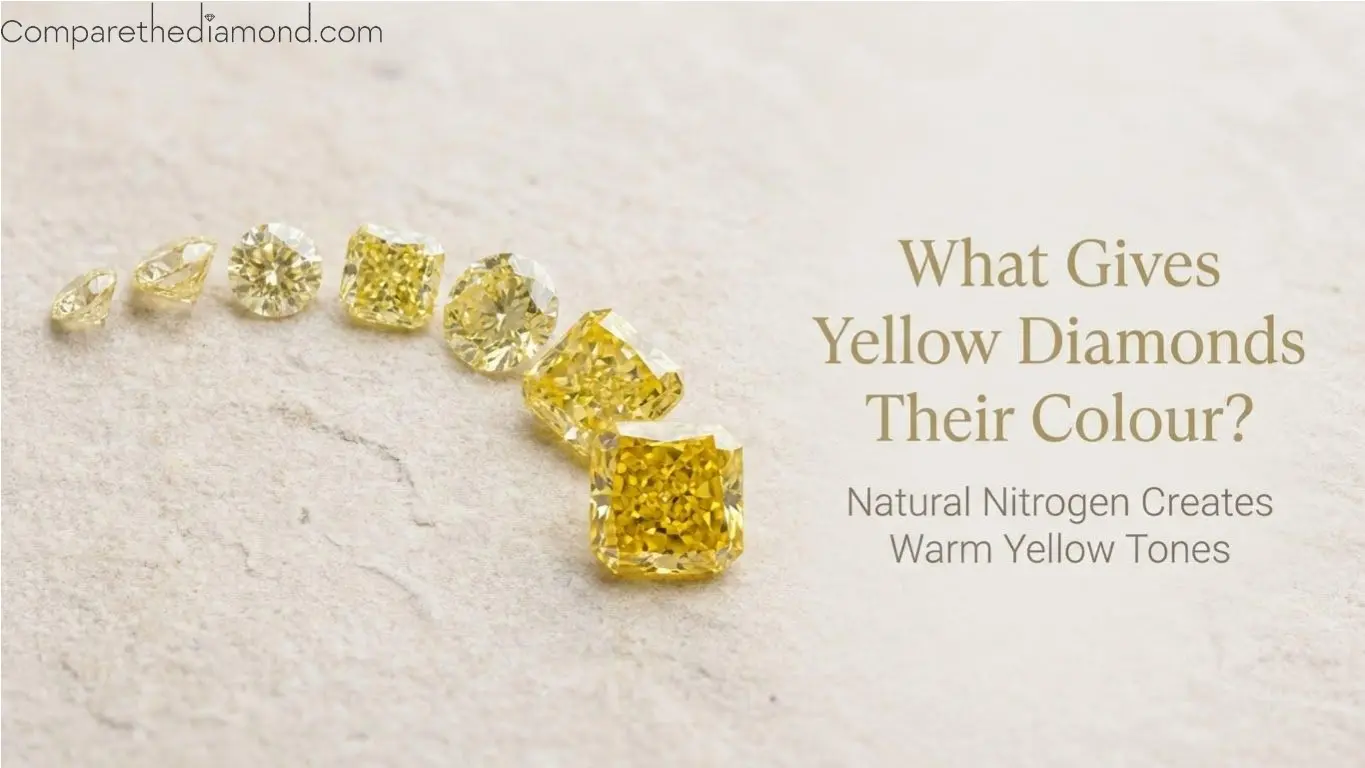
The yellow colour in a diamond comes from the presence of nitrogen atoms within the diamond’s crystal structure. These nitrogen atoms absorb blue light, causing yellow tones to be reflected back to the eye.
This process happens naturally during the diamond’s formation and explains why yellow diamonds can vary so much in appearance. Some stones show a soft, buttery warmth, while others glow with a strong canary colour. Even diamonds of the same size can look dramatically different depending on how much nitrogen is present and how the stone is cut.
The History and Rarity of Yellow Diamonds
Yellow diamonds have been admired for centuries, but they gained global recognition in the 19th century after major diamond discoveries in South Africa. Before that, they were often seen as collector’s stones rather than mainstream jewellery gems.
In terms of rarity, yellow diamonds are less common than white diamonds, especially when it comes to stones with strong colour intensity. Light yellow diamonds are more widely available, but true Fancy Intense and Fancy Vivid Yellow diamonds are far harder to source. As colour strength increases, so does rarity, which plays a major role in value.
How Are Yellow Diamonds Graded?
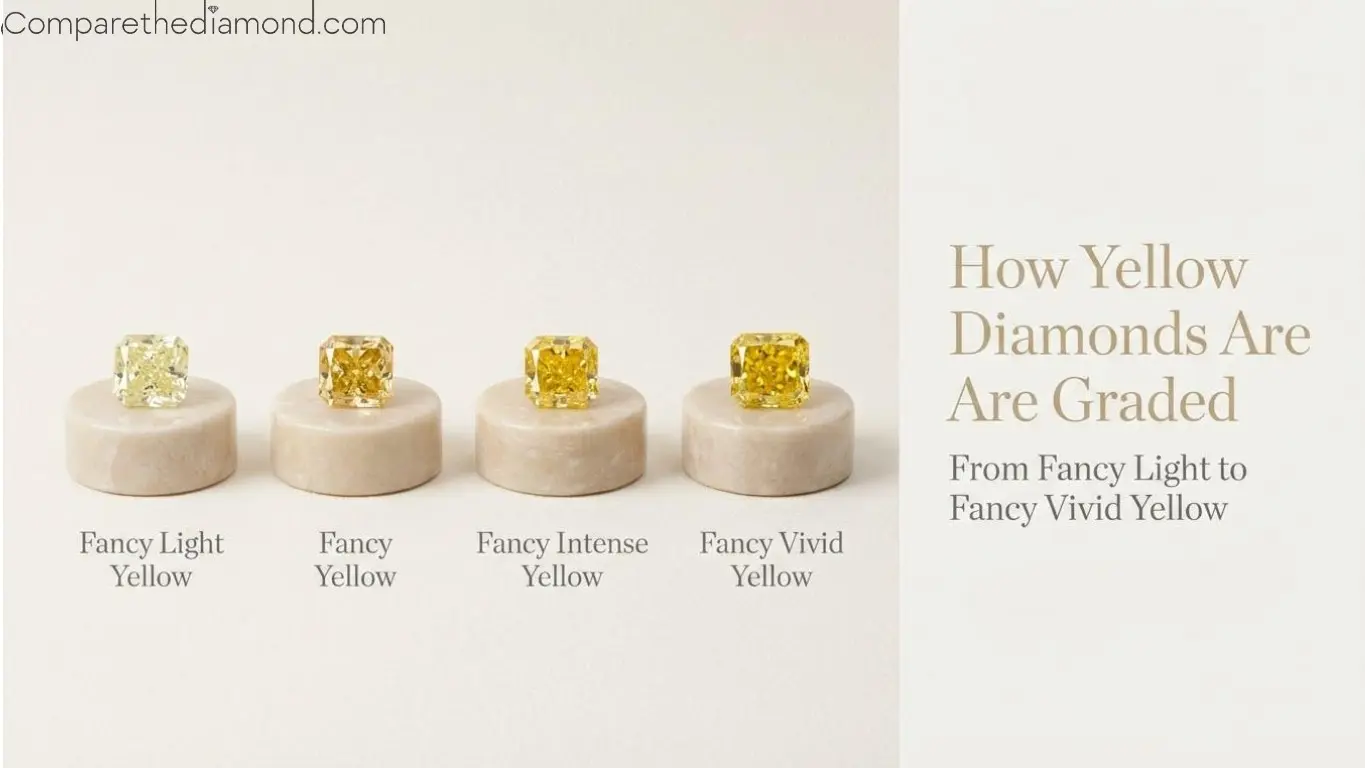
Yellow diamonds are graded very differently from white diamonds. Instead of focusing on the absence of colour, grading is based on how intense, even, and attractive the yellow colour appears.
Grading terms such as Fancy Light Yellow, Fancy Yellow, Fancy Intense Yellow, and Fancy Vivid Yellow describe increasing levels of colour saturation. Among these, vivid yellow diamonds are the most sought after due to their strong, pure colour. Secondary tints, such as brownish or greenish undertones, can reduce a diamond’s desirability and value.
Cut also plays a crucial role in grading appeal. Certain shapes, like radiant and cushion cuts, are especially popular because they help concentrate colour and enhance brilliance at the same time.
Are Yellow Diamonds Expensive?
Whether yellow diamonds are expensive depends largely on colour intensity. Lighter yellow diamonds can be more affordable than high-grade white diamonds, making them attractive to buyers looking for something unique without exceeding budget.
However, as the colour becomes stronger and more vivid, prices can rise significantly. A smaller Fancy Vivid Yellow diamond may cost more than a larger light yellow stone because intensity and rarity often matter more than size alone. In the world of coloured diamonds, colour is king.
How Much Do Yellow Diamonds Cost Compared to White Diamonds?
Yellow diamonds are not automatically cheaper or more expensive than white diamonds. A pale yellow diamond may cost less than a top-quality colourless diamond, while a vivid yellow diamond can exceed the price of many white diamonds due to its rarity.
This is why comparisons should always be made carefully. Looking only at carat weight or price per carat doesn’t tell the full story. Colour grade, cut quality, and certification all have a major impact on overall value.
Are Yellow Diamonds a Good Investment?
Yellow diamonds can be a good investment when chosen carefully. Natural diamonds with strong, pure yellow colour, reputable certification, and desirable cuts tend to maintain long-term appeal. Collectors and investors often focus on colour intensity rather than size, as vivid stones are harder to replace.
That said, the best approach is to buy a yellow diamond you genuinely love. Emotional value and wearability often go hand-in-hand with long-term desirability, especially in fine jewellery.
Yellow Diamond Engagement Rings and Jewellery
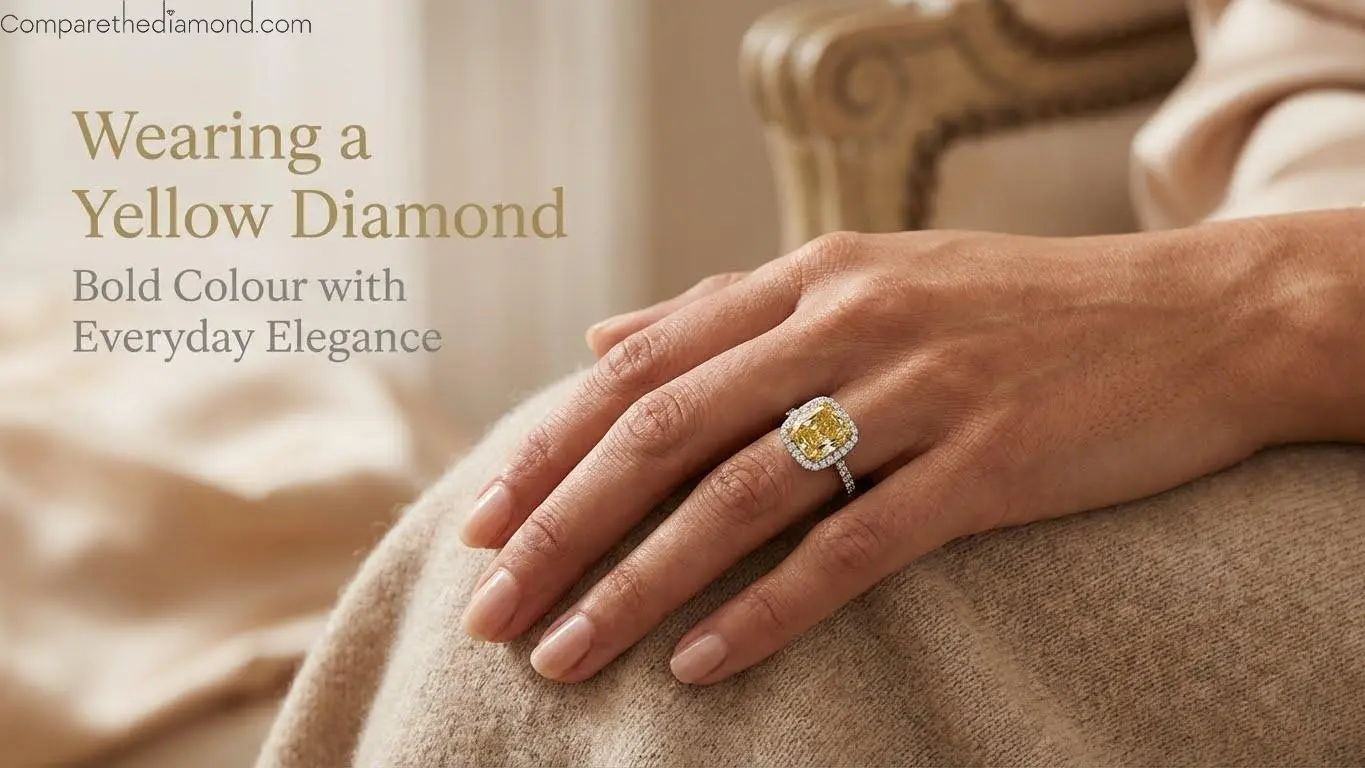
Yellow diamonds are incredibly versatile and work beautifully in many jewellery styles. Engagement rings with yellow centre stones are especially popular, often paired with white diamond halos to create contrast and enhance brilliance. Yellow gold settings intensify warmth, while white metals like platinum offer a crisp, modern look.
Beyond rings, yellow diamonds shine in pendants, earrings, and bespoke jewellery pieces. Their colour adds character without overpowering the design, making them suitable for both everyday elegance and statement pieces.
Final Thoughts
Yellow diamonds combine rarity, beauty, and meaning in a way few gemstones can. Their warm glow symbolises joy, optimism, and individuality, making them ideal for those who want a diamond that feels personal rather than predictable. When chosen with the right colour intensity and cut, a yellow diamond becomes a timeless piece that stands out for all the right reasons.