
Whether you’re hunting for the perfect engagement ring or treating yourself to a new piece of fine jewellery, the setting is just as important as the stone itself. The setting doesn't just dictate the "vibe" of the ring; it determines how much light hits the gem, how secure it is for daily wear, and how often you’ll need to visit a jeweller for maintenance.
To help you navigate your options, here is the ultimate guide to the most popular ring settings, expanded with expert insights on style and durability.
1. The Prong (Claw) Setting
The prong setting is the most iconic choice for engagement rings. It involves small metal claws that reach up over the stone to hold it firmly in place.
- The Vibe: Classic, timeless, and elegant.
- The Benefit: By using minimal metal, the prong setting allows the maximum amount of light to enter the diamond from all angles, resulting in maximum sparkle.
- The Trade-off: By elevating the stone to capture maximum light, this setting naturally creates a higher profile on the finger. While this provides a dramatic and classic look, the exposed nature of the fine metal claws means they are more susceptible to catching on delicate fabrics, knitwear, or hair. It’s a small compromise for the sheer volume of brilliance the setting allows, but it’s something to keep in mind if you have a particularly "hands-on" lifestyle.
- Maintenance: Over years of daily wear, even the strongest precious metals can experience subtle changes. We recommend having your ring professionally inspected periodically to ensure the claws haven't thinned down through friction or "lifted" away from the diamond’s surface. Catching these tiny shifts early through a routine check-up is the best way to maintain the structural "grip" of the setting and keep your stone perfectly centred.
- The Pro Tip: Get into the habit of performing a periodic "sound check" by holding the ring close to your ear and giving it a gentle shake. The stones should be silent and perfectly still. If you ever detect a faint rattle, it’s time to have a specialist tighten the setting to restore its original security.
2. The Bezel Setting
In a bezel setting, a thin metal rim completely or partially surrounds the perimeter of the stone.
- The Vibe: Sleek, modern, and industrial.
- The Benefit: This is the most secure setting available. It protects the edges of the stone from chipping and is completely snag-free—perfect for nurses, athletes, or anyone with an active lifestyle.
- The Trade-off: Choosing a bezel setting means opting for a look defined by clean, modern lines rather than exposed edges. Because the metal fully encircles the stone, the light performance is focused through the top of the diamond (the crown), creating a concentrated, high-contrast sparkle rather than the "side-view" brilliance of an open setting.
- Maintenance & Care: This is a low-maintenance hero. There are no claws to snag or bend.
- The Pro Tip: Dirt and hand cream can accumulate under the rim where the stone meets the metal. Use a soft-bristled toothbrush and warm soapy water to clean the underside regularly to maintain brilliance.
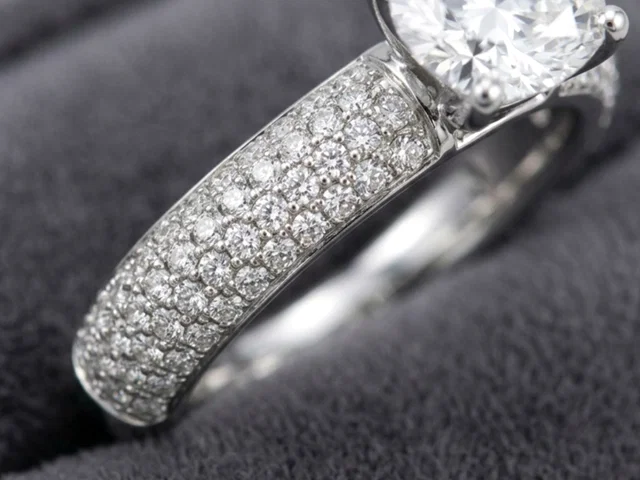
3. The Pavé Setting
Derived from the French word for "pavement," this setting involves "paving" the band with tiny diamonds held in place by nearly invisible droplets of metal.
- The Vibe: Glamorous, glittering, and high-end.
- The Benefit: It adds a continuous surface of shimmer to the band, making the entire ring feel like it's made of light.
- The Trade-off: Due to the intricate nature of the setting, small stones can occasionally loosen. It is also very difficult to resize a pavé band that is fully set all the way around.
- Maintenance & Care: To keep a pavé setting in peak condition, it’s all about gentle consistency. Because the diamonds are secured by microscopic beads of metal to create that "paved with light" effect, they benefit from a softer touch during daily activities to ensure those delicate settings remain perfectly aligned.
- The Pro Tip: Avoid wearing pavé rings during high impact activities like the gym or while gardening. Check the band frequently under a magnifying glass to ensure no "beads" have flattened.
4. The Channel Setting
In this style, smaller stones are set into a groove or "channel" between two parallel walls of metal.
- The Vibe: Streamlined and sophisticated.
- The Benefit: Because the stones are recessed into the band, they are extremely well protected. This makes it an ideal choice for a wedding band that you never intend to take off.
- The Trade-off: To gain the incredible security and snag-free "smoothness" of a channel setting, you trade off a small amount of light entry to the sides of the diamonds. While the metal walls protect the stones' edges, it means the sparkle is concentrated through the top of the ring rather than the sides.
- Maintenance & Care: Because the stones are set into a continuous track, the channel can act as a natural catch for everyday debris like lotions or soaps. A regular soak in warm, soapy water is the best way to keep that "track" clear and ensure your diamonds continue to shine from within the setting.
- The Pro Tip: Use a silk scarf or a fine-knit sweater as your "setting sensor." Because a channel setting is designed to be perfectly flush and snag-free, the stones should never catch on delicate fabrics. This simple, five second test, is a great way to know when your ring needs some professional attention.
5. The Tension Setting
This futuristic design uses the literal physical pressure of the metal band to squeeze the stone, making it appear as though it is floating in mid-air.
- The Vibe: Avant-garde, architectural, and bold.
- The Benefit: It offers incredible light exposure, as there are no prongs or rims blocking the sides of the gem.
- The Trade-off: By choosing this high-tension architecture, you are trading "off-the-shelf" flexibility for a masterclass in structural physics. Because the stones are held by the calculated spring-force of the metal, the ring’s diameter is part of its security. This means it cannot be resized like a standard band and requires a specialist to recalibrate the tension to ensure the stones remain perfectly locked in place.
- Maintenance & Care: Because this setting is designed with open "windows" at the top and bottom of the stones, it relies on a clear path for light to enter and exit. these settings are most brilliant when the underside facets are perfectly mirrored. We recommend a regular clean with a very soft bristled pointed brush to clear any film from the back of the diamonds.
- The Pro Tip: The security of this setting doesn't come from prongs, but from the constant inward force of the band. To maintain this "vice-like" grip, the ring needs to stay perfectly circular. We recommend a regular "Shape Check" to ensure the band hasn't become slightly oval. Keeping the ring perfectly round is what ensures the tension remains equal across the entire stone.
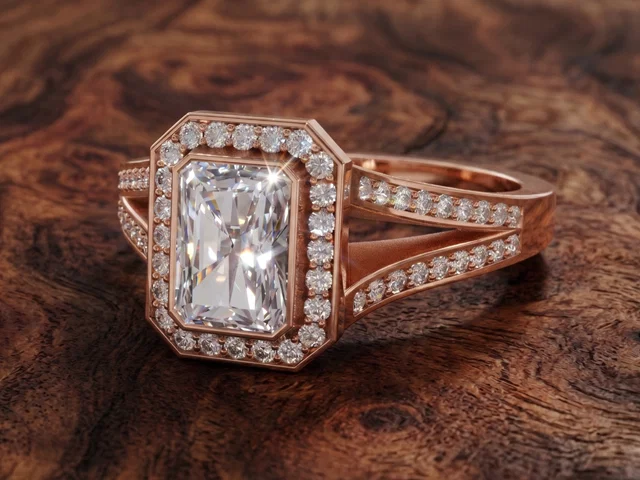
6. The Halo Setting
A halo setting features a central gemstone surrounded by a "halo" of smaller accent diamonds.
- The Vibe: Vintage-inspired and opulent.
- The Benefit: The primary advantage of a halo is that it makes the centre stone look much larger than it actually is, offering a "big look" for a lower price point.
- The Trade-off: By choosing a multi-stone design, you are trading the simplicity of a single diamond for a much more intricate, high-brilliance look. More stones naturally mean more settings to keep an eye on, but for many, that extra "wall of light" is well worth the added detail.
- Maintenance & Care: To keep a detailed setting like this looking its best, it requires a little more attention than a plain band. A gentle regular cleaning and a quick periodic check ensure that all those delicate accent stones stay bright and securely in place.
- The Pro Tip: If you knock the ring against a hard surface, check the "halo" immediately. The small accent stones are often the first things to go missing in an accidental collision.
7. The Flush (Gypsy) Setting
In a flush setting, the stone is hammered into a hole in the metal so that it sits perfectly level with the surface of the band.
- The Vibe: Subtle, unisex, and understated.
- The Benefit: This is arguably the most durable setting. Since the stone doesn't protrude, it is almost impossible to damage or lose during heavy-duty work.
- The Trade-off: This setting is generally reserved for smaller stones, as a very deep stone would require an uncomfortably thick band.
- Maintenance & Care: Very low. This is the ultimate "set and forget" style.
- The Pro Tip: Over time, the metal lip holding the stone in may thin out due to daily friction. A professional valet once in a while is advised to check if the metal needs to be burnished back over the stone.
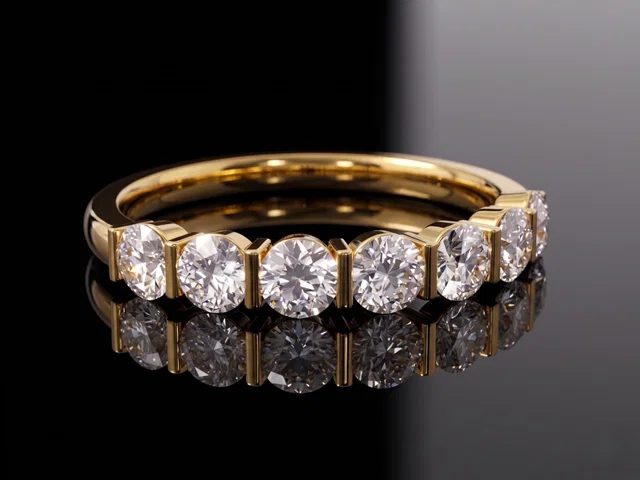
8. The Bar Setting
Similar to a channel setting, but instead of a continuous groove, the stones are separated by vertical metal bars.
- The Vibe: Contemporary and geometric.
- The Benefit: The bar setting uses individual metal dividers to create distinct windows of light. This allows light to enter the stones from multiple angles, creating a rhythmic "fire" and a bold, stepped look that beautifully emphasizes the individual character of each diamond.
- The Trade-off: Choosing this design means trading the "total-wrap" protection of a full channel for a more open, high-visibility style. While the diamonds are securely held by the vertical bars, their sides are intentionally left open to the elements. It’s a choice of transparency over total enclosure, requiring a slightly more mindful wearer in exchange for a much clearer view of the stones.
- Maintenance & Care: A bar setting is unique because it leaves the top and bottom "windows" of the diamond completely open. To maximize the brilliance of this specific design, ensure you focus your cleaning on the exposed facets (the underside). By keeping these "open-air" zones clear of dirt and oils, you enable the diamonds to achieve a high-velocity sparkle that mimics the performance of a floating solitaire.
- The Pro Tip: Because bar settings are designed to be "smooth-to-the-touch," the best way to monitor them is through tactile feedback. If you feel a "lip" or a sharp edge where there was once a smooth flow, it’s a sign that the metal has burnished slightly—a quick professional polish will restore the "lock" and the ring's signature sleek feel..
9. The Cluster Setting
A cluster setting "bunches" several smaller stones together to create the illusion of one large, uniquely shaped diamond.
- The Vibe: Floral, whimsical, and creative.
- The Benefit: Highly budget friendly. You can achieve a high-impact look using many small stones, which cost significantly less than one large single carat diamond.
- The Trade-off: Because these settings often feature intricate profiles or wider footprints, they rarely sit flush with a standard, straight ‘off the shelf’ wedding bands. They usually require a custom-contoured or bespoke fitted wedding band to perfectly complement the curves of your engagement ring.
- Maintenance & Care: Because of the detailed "nooks and crannies" this setting loses its "wow factor" quickly if it gets greasy. Gentle soaking in a jewellery cleaning solution or mild soap is required to keep the cluster from looking dull.
- The Pro Tip: Use the "Fingernail Test" for a quick confidence check. Once a month, gently try to "nudge" each stone with your fingernail. In a high-quality cluster setting, the stones should feel like a single, solid piece of ice. If you feel even a microscopic "give" or movement in one of the diamonds, it’s an early signal that a prong needs a professional tighten—well before it ever becomes a risk.
10. The Three-Stone Setting
Also known as a "trilogy" ring, this features one larger centre stone flanked by two side stones.
- The Vibe: Traditional and balanced.
- The Benefit: Beyond the aesthetic, this setting is deeply symbolic, the trilogy of stones represents a couple's past, present, and future. It offers a very balanced, symmetrical look on the finger.
- The Trade-off: Choosing three stones means coordinating the colour and clarity grades of all three so they don't look mismatched.
- Maintenance & Care: Because a three-stone ring has a wider "bridge" of diamonds across the finger, the two outer stones (the shoulders) take the brunt of everyday side-impacts that a single solitaire doesn't encounter. We recommend a quick "profile check" every so often to ensure the outer claws haven't been subtly flattened or pushed by contact with hard surfaces like door handles or desks.
- The Pro Tip: To keep the ring looking its best, always ensure the side stones are cleaned with the same intensity as the centre. If the side stones become even slightly duller than the middle, they stop reflecting light into the centre stone and start absorbing it, which can make the main diamond appear smaller or less vibrant than it actually is.
Your Style, Your Choice
At the end of the day, the "best" setting is the one that makes you want to look at your hand every five minutes. Whether you’re drawn to the sleek, modern protection of a Bezel or Flush mount, or the elevated, light-catching drama of Prongs and Halos, every ring we create is engineered to showcase your diamond's natural fire.
Designing a ring is a personal journey, and at ComparetheDiamond.com, we’re here to help you navigate the options. We focus on providing the transparency and expertise you need to find a setting that fits your lifestyle perfectly, ensuring your diamond remains a stunning centrepiece for years to come.