
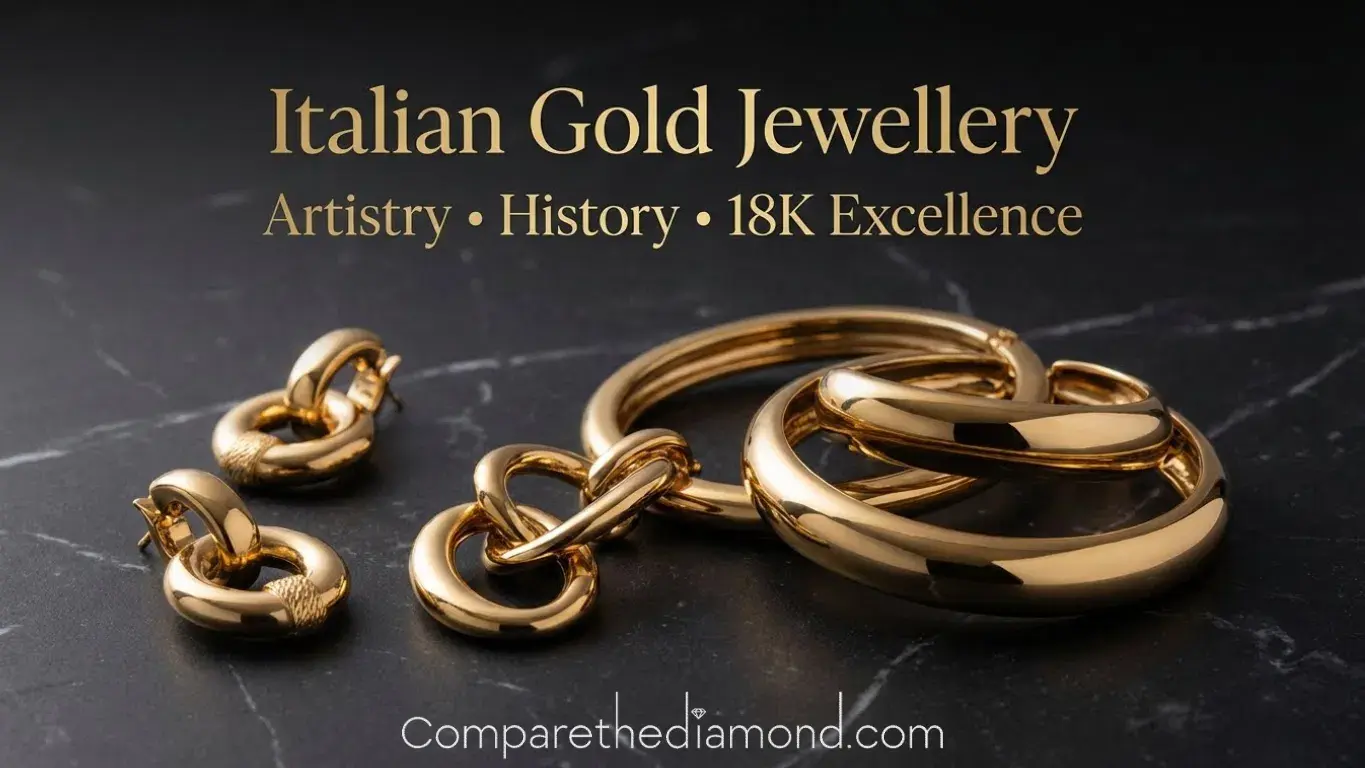
The story of traditional Italian jewellery is a global narrative of luxury, style, and innovation spanning three millennia. It is a history that began long before the Roman Empire, rooted in the sophisticated techniques of the Etruscans, and continues today through world-renowned master artisans. This comprehensive exploration answers the fundamental question: what is Italian jewellery? It is the perfect blend of ancient mastery and modern, high-karat excellence, exemplified by the enduring appeal of its earrings and bangles.
The Ancient Legacy: Etruscan Origins and Foundational Techniques
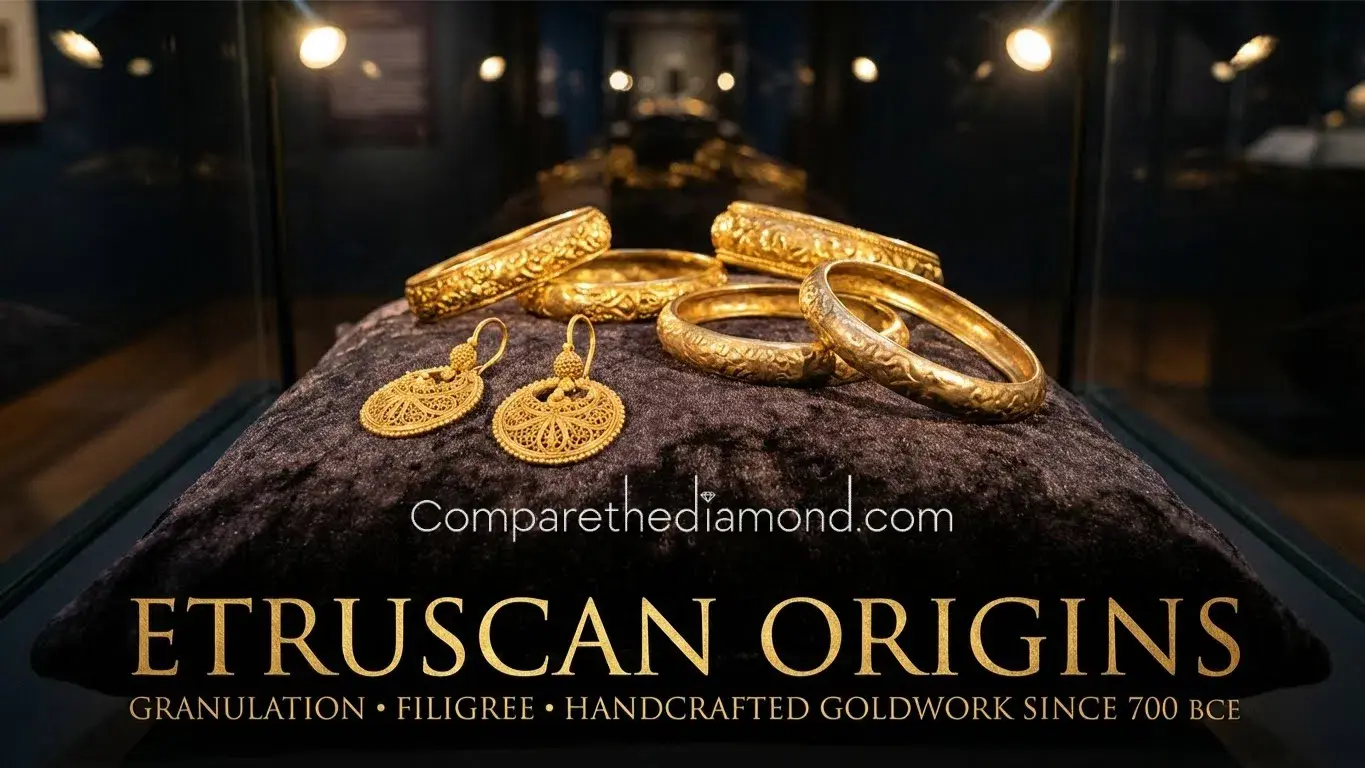
The earliest phase of this distinguished tradition is traced to the Etruscan civilization, which flourished in central Italy around 700 BCE. These early inhabitants were revolutionary goldsmiths who established a sophisticated standard for personal adornment. Both men and women wore elaborate pieces. The Etruscans established the foundational styles for earrings and bangles, often crafting them from high-purity gold, silver, and the natural gold-silver alloy known as electrum.
Etruscan artisans perfected several complex, enduring Italian gold jewellery techniques:
-
Granulation: The painstaking process of fusing thousands of microscopic gold beads onto a surface without solder, creating a unique, textured quality. This technique was frequently used to add fine, delicate detail to disc-style earrings.
-
Filigree: The twisting of fine gold or silver threads into intricate, lace-like motifs, highly suitable for ornate, lightweight earrings and bangles.
-
Repoussé and Engraving: Methods used to emboss and carve intricate details directly into the metal, giving depth to wide bangles and amulets.
This meticulous craftsmanship, often performed in high-purity gold, set the aesthetic and technical standard for all subsequent Italian gold jewellery techniques.
Roman Jewellery History: Status, Style, and the Purity Standard
As Rome rose to dominance, it absorbed the unparalleled craftsmanship of the conquered Etruscan territories. Roman jewellery history is characterized by the use of jewellery as a clear marker of social rank and affluence, cementing its role beyond simple aesthetics.
Roman Influence on Earrings and Bangles
Roman designers made pieces more elaborate, incorporating carved cameos and vibrant gemstones such as emerald, amethyst, and pearl, reflecting the empire's vast trade routes.
-
Earrings: Were often long and dangling, designed to highlight the wearer's wealth, sometimes featuring intricate stone settings.
-
Bangles and Bracelets: Were worn in multiples and often designed with twisted gold (like the torc adopted from conquered Gauls) or carved materials, symbolizing immortality and fertility (coiling snake motifs).
The importance of jewellery was so integrated into societal structure that Roman lawmakers introduced sumptuary laws restricting the right to wear high-karat gold items to high-status citizens. This historical context highlights the profound cultural significance of fine gold pieces.
The 18-Karat Gold Legacy
The concept of high purity, now standard in Italian fine jewellery, has ancient roots. While pure 24-karat gold is too soft for durable wear, the alloyed gold utilized by Roman and later Italian goldsmiths achieved an ideal balance. Today, Italian fine jewellery adheres almost universally to the 18-karat gold standard (75% pure gold). This high percentage provides a richer, warmer colour and a superior luster compared to lower-karat options, while the 25% alloy of metals like copper and silver provides the necessary strength to prevent the earrings and bangles from bending or losing shape during daily wear. This dedication to 18-karat gold ensures exceptional longevity, making the pieces highly resistant to tarnish and allowing them to retain their value.
The Resurgence: Renaissance Masters and Modern Jewellery Districts
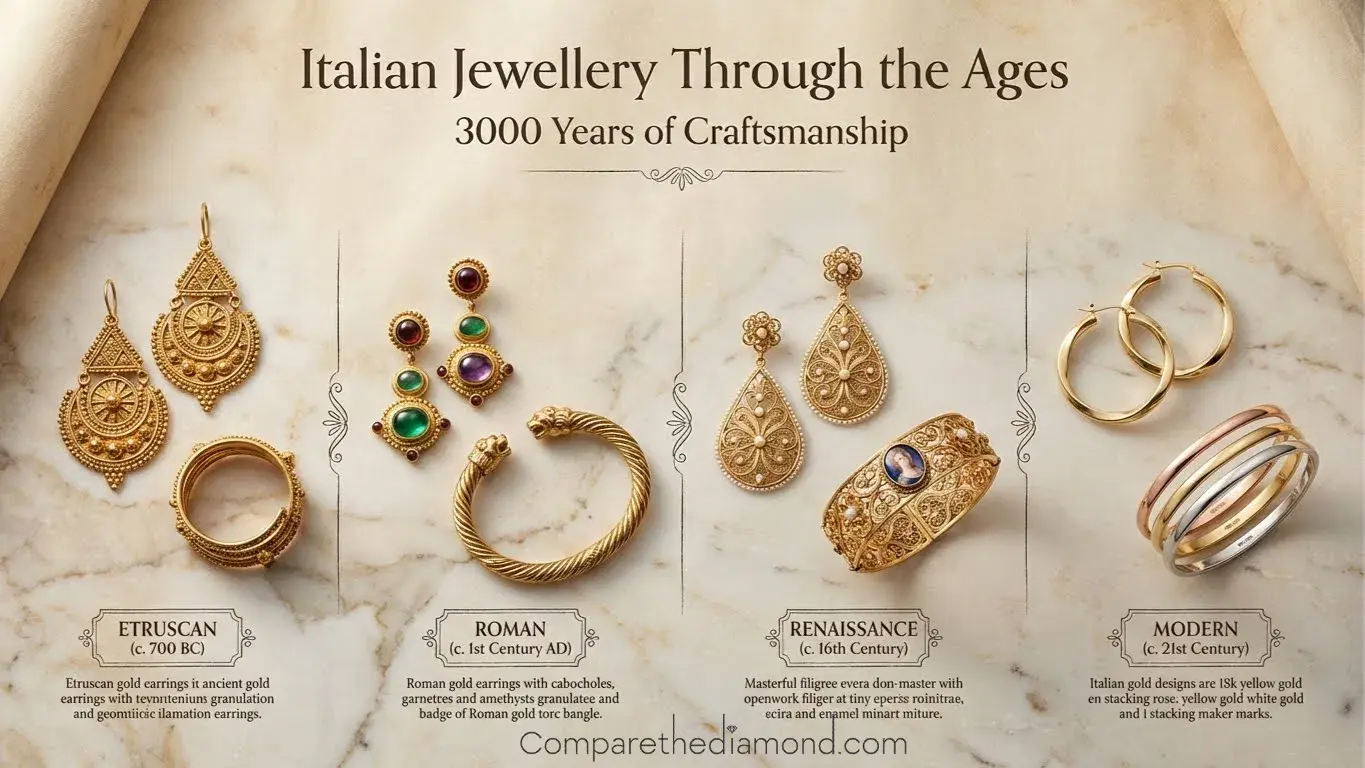
Following a period of decline during the Middle Ages, the Renaissance catalyzed a massive artistic resurgence. Cities like Florence became centers of innovation where master goldsmiths were revered alongside painters and sculptors.
The Influence of Renaissance Goldsmiths
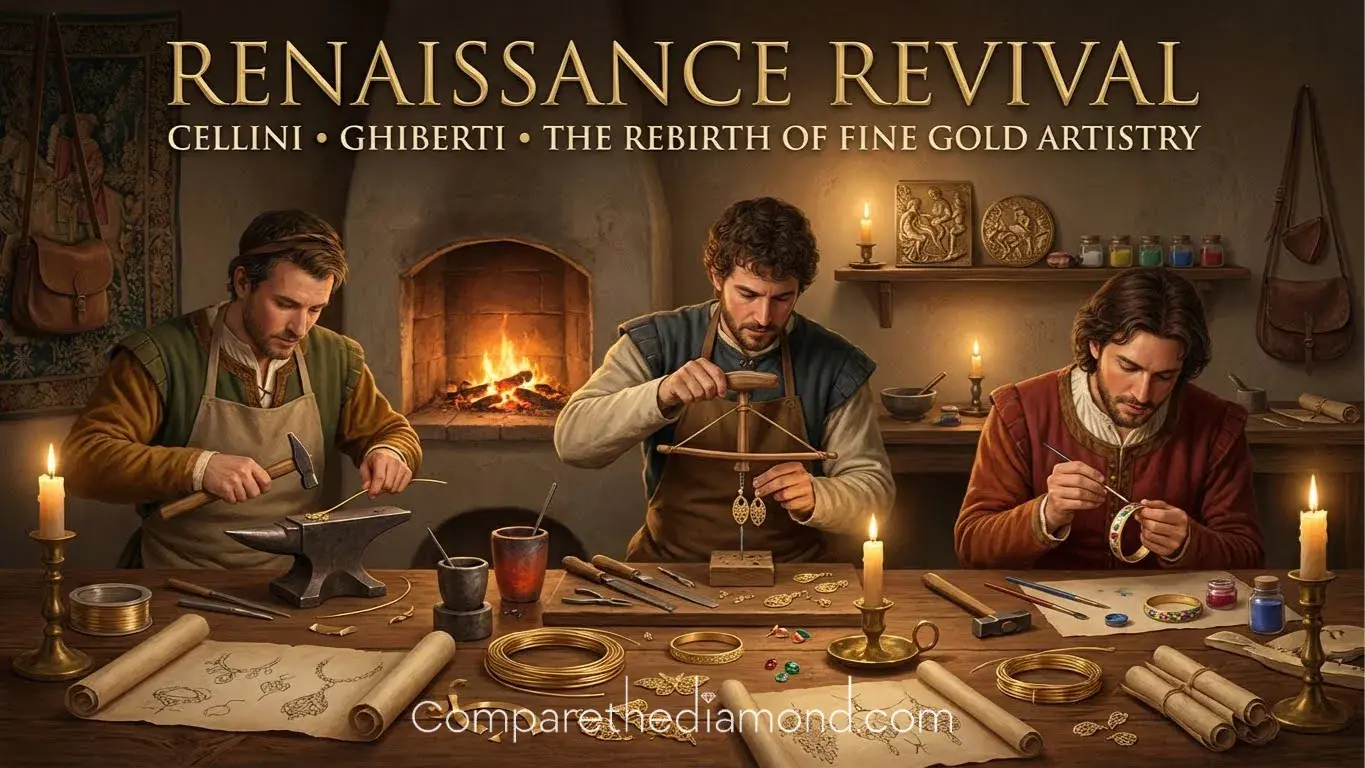
Figures like Benvenuto Cellini and Lorenzo Ghiberti began their careers in goldsmiths' workshops, where they learned the precision and intricate detailing necessary for their later masterpieces. Their influence propelled techniques like enamelling, detailed engraving, and intricate stone setting into high fashion. This intense focus on artistry led to the creation of elaborate sets of matching jewellery (parures), often depicted in Renaissance portraiture, showcasing complex pendants and highly ornamented earrings and bangles that were prized across Europe.
The historical techniques were dramatically revived in the 19th century by master jeweller Pio Fortuna Castellani, who dedicated his career to reproducing and mastering the lost Etruscan arts, proving the timelessness of Italian gold jewellery techniques.
What is Italian Jewellery? Characteristics of Modern Style
Today, what is Italian jewellery is defined by a commitment to quality, high purity, and unparalleled artistry. This reputation is maintained by specialized manufacturing districts across the country, particularly Valenza and Vicenza.
Defining Characteristics and Craftsmanship
The modern industry upholds these defining characteristics of Italian gold jewellery:
-
Master Craftsmanship: The legacy ensures pieces are handcrafted using specialized tools and methods like Bulino engraving (creating intricate hand-etched textures) and Tubogas (a seamless coiling technique that creates signature flexible bangles and chains).
-
Design Fusion: Italian designers are masters at blending ancient techniques with modern aesthetic demands, ensuring the jewellery is both classic and fashion-forward.
Contemporary Italian Style: Earrings and Bangles Focus
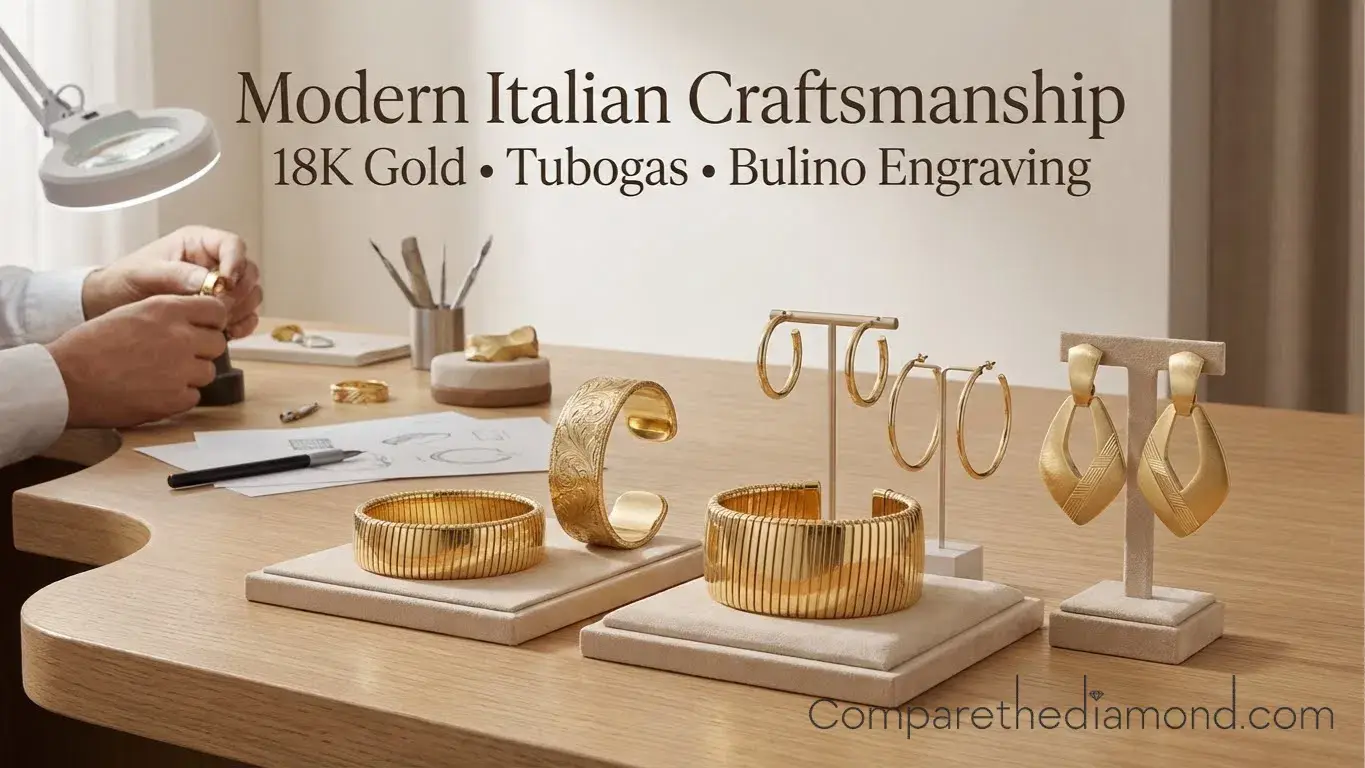
Modern Italian designers continue to innovate, keeping Italian gold earrings and bangles at the forefront of global fashion. The industry skillfully adapts historical elegance for the contemporary wearer.
-
Regional Specialties: Florence focuses on fine detailing; Milan on modern, minimalist designs; and Venice for specialized crafts like Murano glass jewellery, where hand-blown glass is often integrated into colourful, unique earrings and bangles.
-
Enduring Styles: Classic pieces like chunky gold and silver bangles, oversized hoop earrings, and intricate mesh chains remain staples, showcasing the ability of traditional Italian jewellery to adapt without losing its historical soul.