
Diamonds are more than sparkling treasures. They are geological miracles, emotional symbols and cultural icons that have shaped human history for thousands of years. Understanding how are diamonds made reveals not only their physical creation but also the reason they continue to define luxury, love and legacy. From their formation deep beneath the Earth to their transformation into jewellery, every diamond carries a story that feels timeless and meaningful.
What Makes Diamonds So Special?
Diamonds stand apart from every other gemstone. Their unmatched hardness, radiant brilliance and emotional symbolism make them universally cherished.
Their physical qualities explain much of their appeal. Diamonds are the hardest natural substance on Earth, formed under pressures and temperatures almost impossible to imagine. Their crystalline structure allows light to reflect and refract in extraordinary ways, creating brilliance and fire that no other gemstone can replicate.
These natural qualities blend beautifully with emotional meaning. Diamonds represent endurance, strength, commitment and purity, which makes them powerful symbols of love and celebration. This combination of science and sentiment is what makes diamonds so special.
Where Were Diamonds First Discovered?
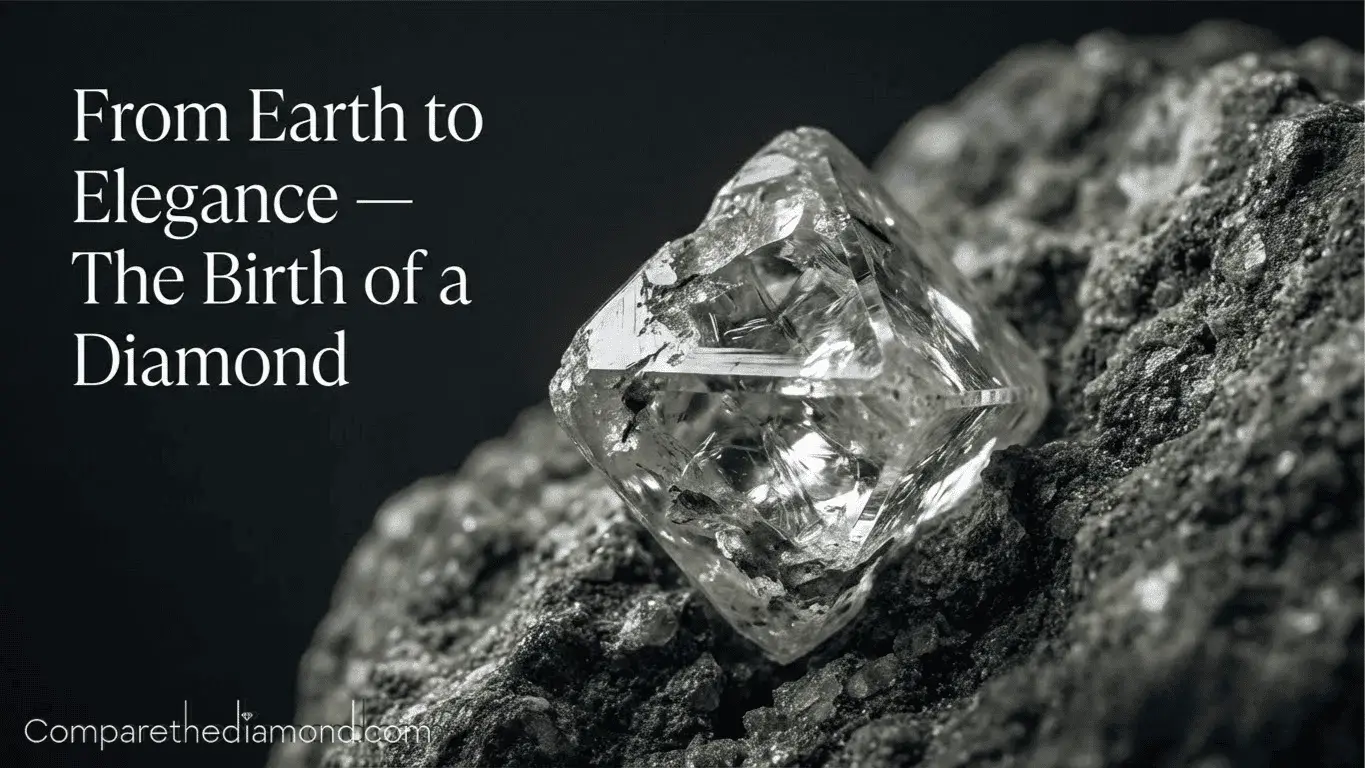
The earliest known diamonds were discovered in ancient India. This region is where diamonds were first discovered in riverbeds, appearing as rough and uncut stones. Ancient civilizations believed diamonds carried protective and spiritual powers, using them as talismans and sacred objects.
As trade routes expanded across Asia and Europe, diamonds gained attention among nobles and royalty. Their rarity made them prized possessions long before they ever sparkled in jewellery. These early origins laid the foundation for diamonds becoming symbols of power, wealth and mystique.
What Is Diamond Jewellery?
To understand what is diamond jewellery, it helps to see it as an art form. Diamond jewellery transforms one of Earth’s rarest natural materials into something meaningful, wearable and deeply personal.
Diamond jewellery includes engagement rings, pendants, bracelets, bangles, earrings and bespoke designs. Each piece is shaped by craftsmanship, emotion and purpose. Historically, diamond jewellery has represented prestige and romance, while today it embraces both tradition and contemporary style.
Whether worn for love, celebration or self-expression, diamond jewellery connects people to centuries of tradition.
History of Diamond Cutting
The sparkle we admire today is the result of centuries of evolving craftsmanship. The history of diamond cutting tells the story of how diamond brilliance transformed over time.
Early diamonds were worn in their natural forms with minimal shaping. As techniques improved, key cuts began to emerge:
• Medieval period: point cuts and table cuts introduced basic structure
• Renaissance era: rose cut added more shine and elegance
• Georgian and Victorian eras: old mine and old European cuts increased brilliance
• 1919: brilliant cut introduced 58 facets, revolutionizing diamond sparkle
Today’s cutters use advanced technology to achieve precision and symmetry that maximize light performance. Modern diamond sparkle is the product of both tradition and scientific innovation.
How Are Diamonds Made Into Jewelry?
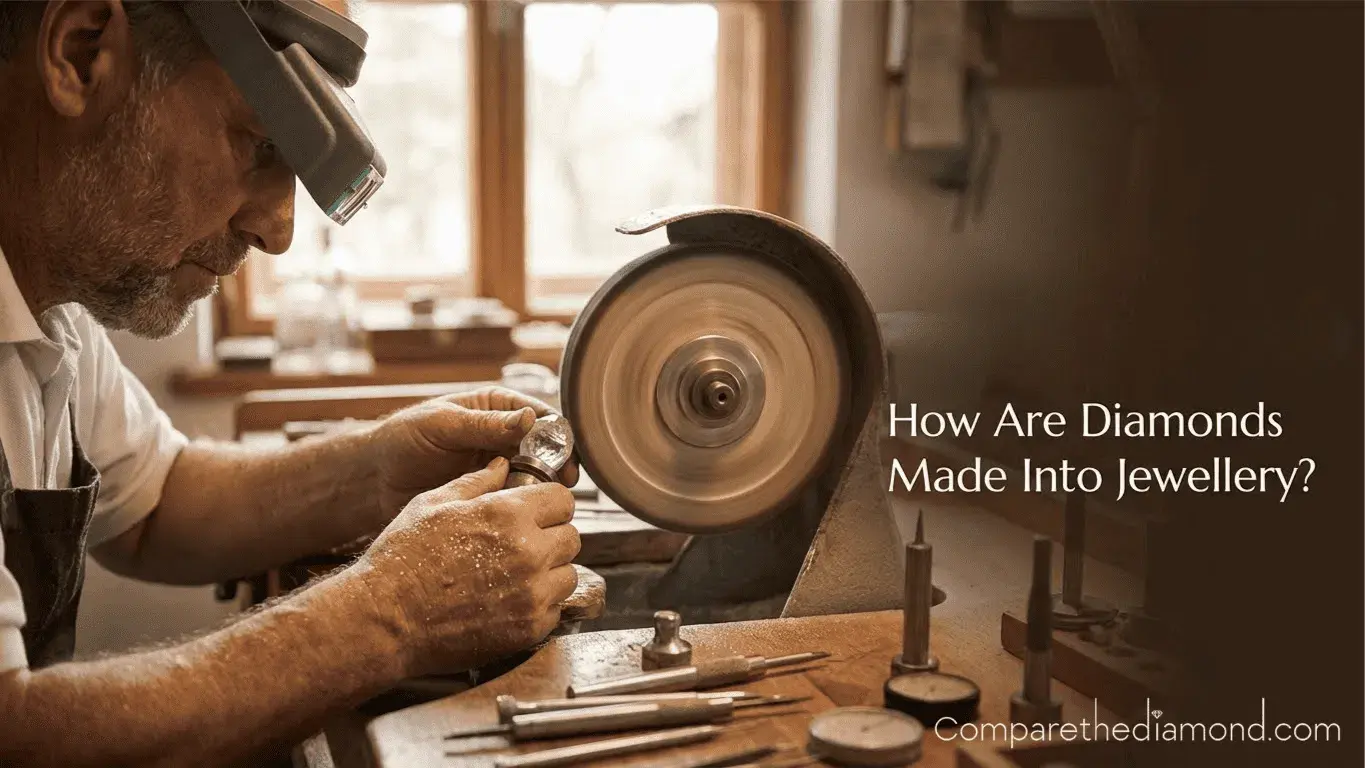
Before a diamond becomes a cherished jewellery piece, it undergoes a series of detailed processes. Understanding how are diamonds made into jewelry shows the craftsmanship behind every finished design.
The process includes:
• Selecting the diamond based on cut, clarity, color and carat
• Creating the jewellery design through sketches or digital models
• Crafting the metal setting in gold, platinum or palladium
• Securing the diamond using prong, bezel or pavé techniques
• Polishing and final inspection for perfection
This careful journey ensures each diamond is displayed with maximum beauty and durability.
Why Are Diamonds Used for Engagement Rings?
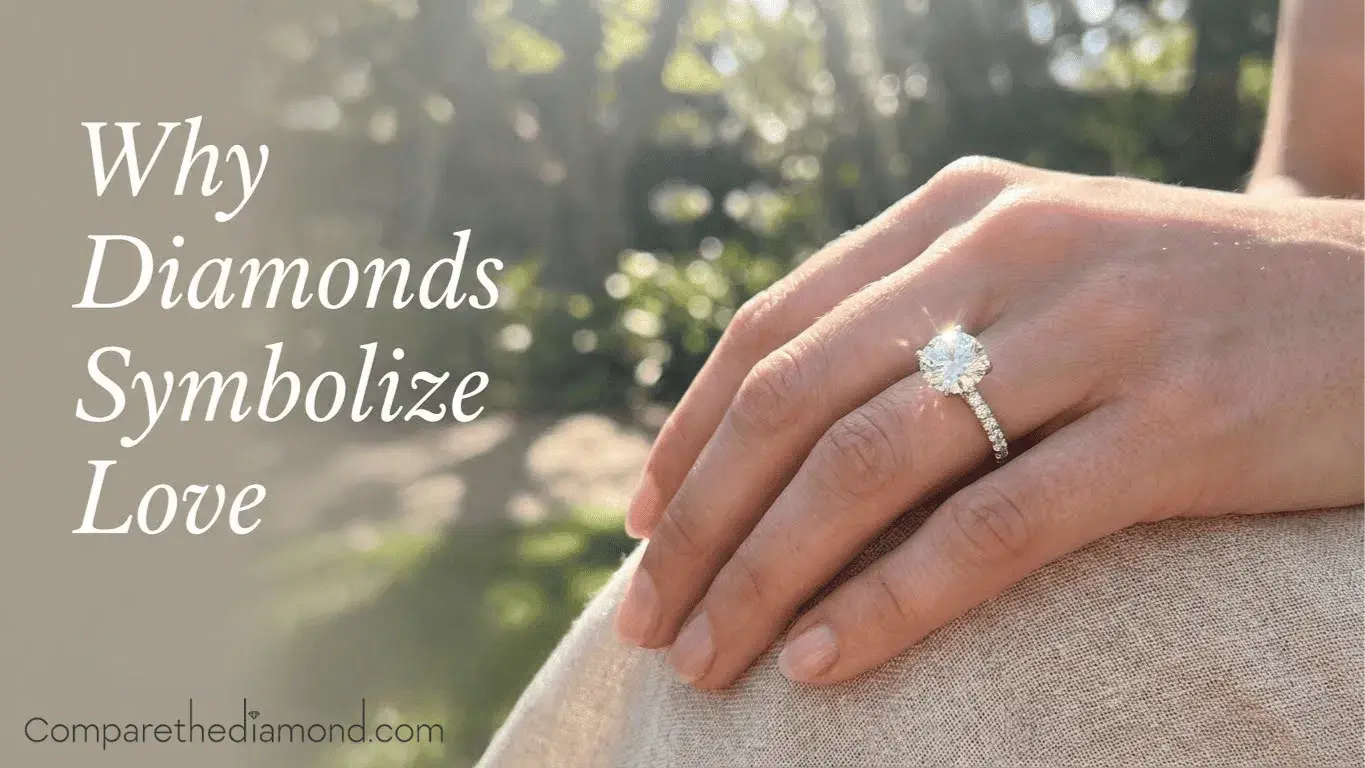
The tradition of diamond engagement rings is deeply rooted in symbolism. To understand why are diamonds used for engagement rings, it helps to look at both history and meaning.
Diamonds represent strength, purity and unbreakable devotion. Their durability reflects the permanence of love, while their sparkle represents hope, celebration and joy. Although engagement rings existed before diamonds, the Victorian and Edwardian eras established diamonds as the ultimate symbol of commitment. Today, this tradition continues globally.
Diamonds became the universal engagement choice not only because of their beauty but because they embody the emotions people want to express.
How Diamonds Are Made: Nature’s Masterpiece
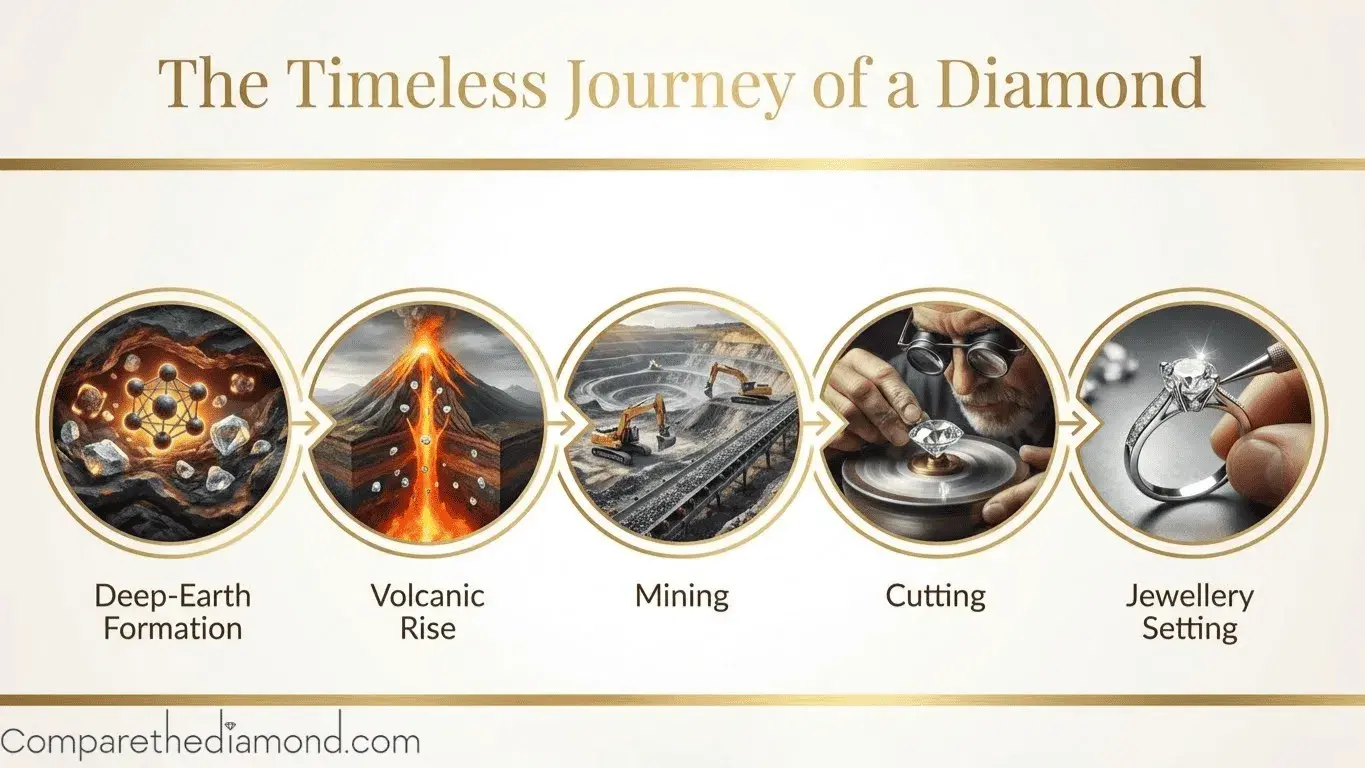
Natural diamonds form more than 100 miles beneath the Earth's surface. They are created when carbon is exposed to extreme heat and pressure over millions of years. Volcanic eruptions then carry these crystals closer to the surface, where they can eventually be mined.
Key natural factors include:
• Temperatures exceeding 1,000°C
• High pressure deep underground
• Carbon molecules bonding into a crystal lattice
• Volcanic movement bringing diamonds upward
This geological process is rare and powerful, which is why diamonds are so valuable.
The Legacy of Diamonds Today
Diamonds have evolved from sacred talismans to royal treasures and now to modern symbols of love and style. Their journey reflects humanity’s fascination with beauty, meaning and prestige. Whether crafted into a timeless engagement ring or a modern fashion piece, diamonds hold emotional value that lasts across generations.
At ComparetheDiamond.com, each diamond carries this remarkable history. Every piece connects the wearer not only to the brilliance of the gem but also to the incredible story that brought it into existence.