
The easiest way to spot whether someone chose their wedding band in a hurry is the gap. It’s not always huge, but it’s noticeable once you see it: the engagement ring sits proudly, and the wedding ring sits beside it like it’s unsure where it belongs. That happens because many engagement rings, especially those with raised settings or larger centre stones, simply don’t leave enough space for a straight band to sit flush.
A fitted wedding ring solves that problem by shaping the band to follow the contours of the engagement ring. Instead of forcing two separate designs to share the same finger, the fitted band is created to sit close, look intentional, and feel comfortable as an everyday pair.
Why a Straight Wedding Band Doesn’t Always Work
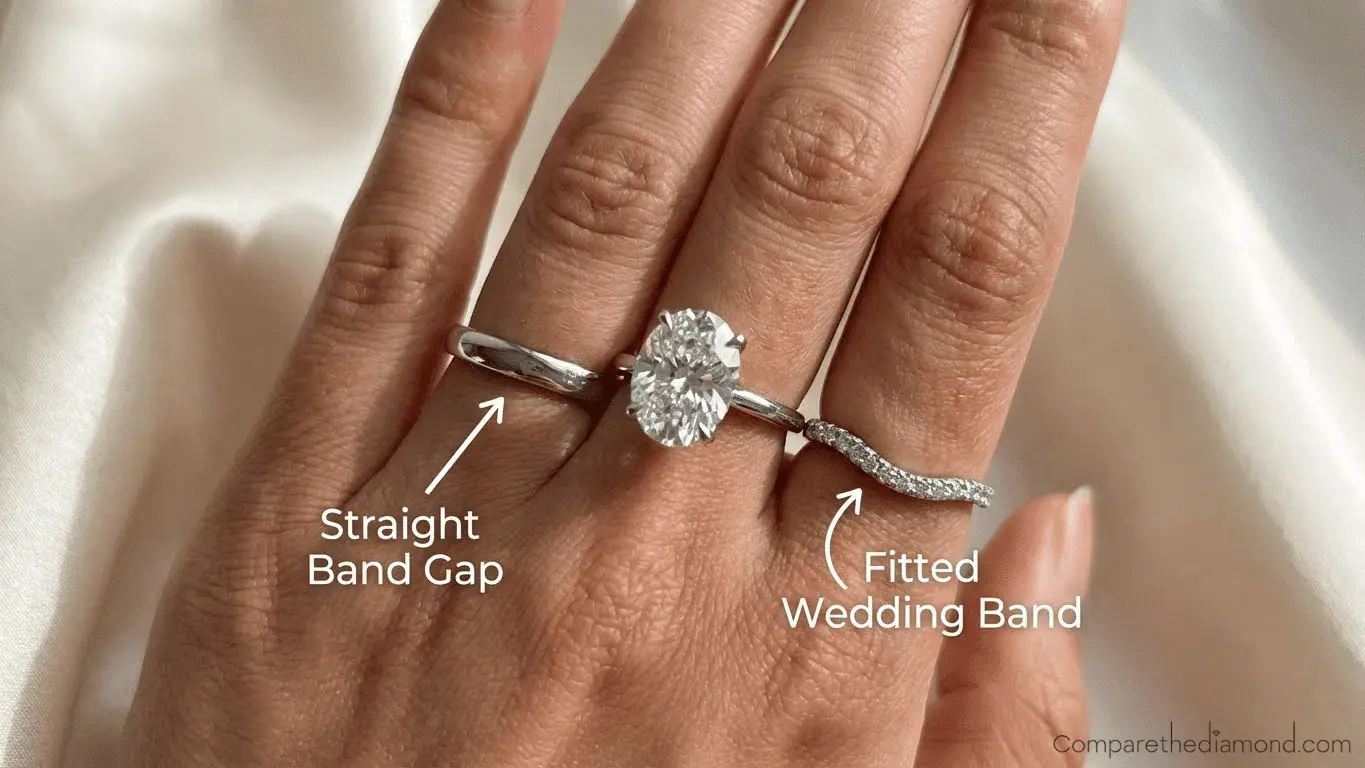
Engagement rings are designed to showcase a centre stone. That often means height, structure, and detail around the setting. A classic solitaire, a halo, a low-set ring, or a ring with a wider head can all create one common issue: a straight wedding ring bumps into the setting before it can sit neatly beside it.
When that happens, you’ll usually see one of three outcomes. The wedding band leaves a visible gap. The band presses against the setting in a way that feels awkward. Or the two rings sit at slightly different angles, which can make the stack look uneven.
A fitted band is designed so those issues don’t become part of your everyday wear.
Types of Fitted Wedding Rings and What Each One Does
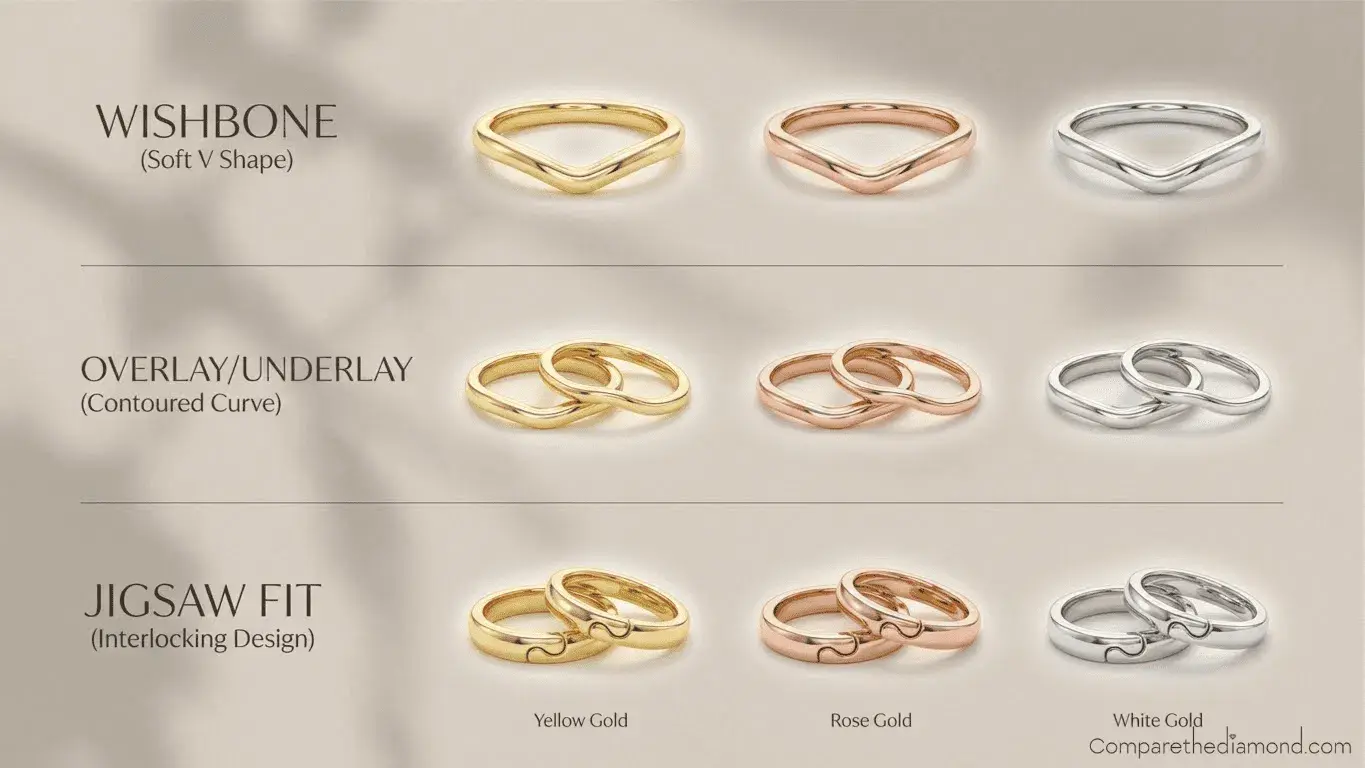
Fitted wedding rings aren’t “one style.” They’re a design solution, and different styles work best depending on the engagement ring.
Wishbone styles are gently curved bands, often shaped like a soft V. They’re popular because they frame a solitaire beautifully and can sit close to the centre setting without looking heavy. A wishbone band also suits people who like a slightly elegant, elongated look on the finger.
Overlay or underlay designs are shaped so the wedding band sits in a way that aligns with the engagement ring’s setting profile. These are useful when the engagement ring has structure that a simple curve can’t accommodate. The goal is to create closeness without pressure points.
Jigsaw fittings are the most precise option. They’re designed to interlock closely with the engagement ring, almost like two pieces made from the same template. This is especially useful for engagement rings with unusual shapes, complex halos, or side stone details where a standard curved band would still leave a gap.
The best part is that fitted doesn’t have to mean “only works as a set.” A well-designed fitted wedding band can still look beautiful worn alone, as long as the shape is balanced and the finish feels complete.
Why Choose a Fitted Wedding Ring?
The first reason is simple: harmony. When an engagement ring is unique, a straight wedding band can look like an afterthought. A fitted band makes the set look deliberate, like it was designed as one story instead of two separate decisions.
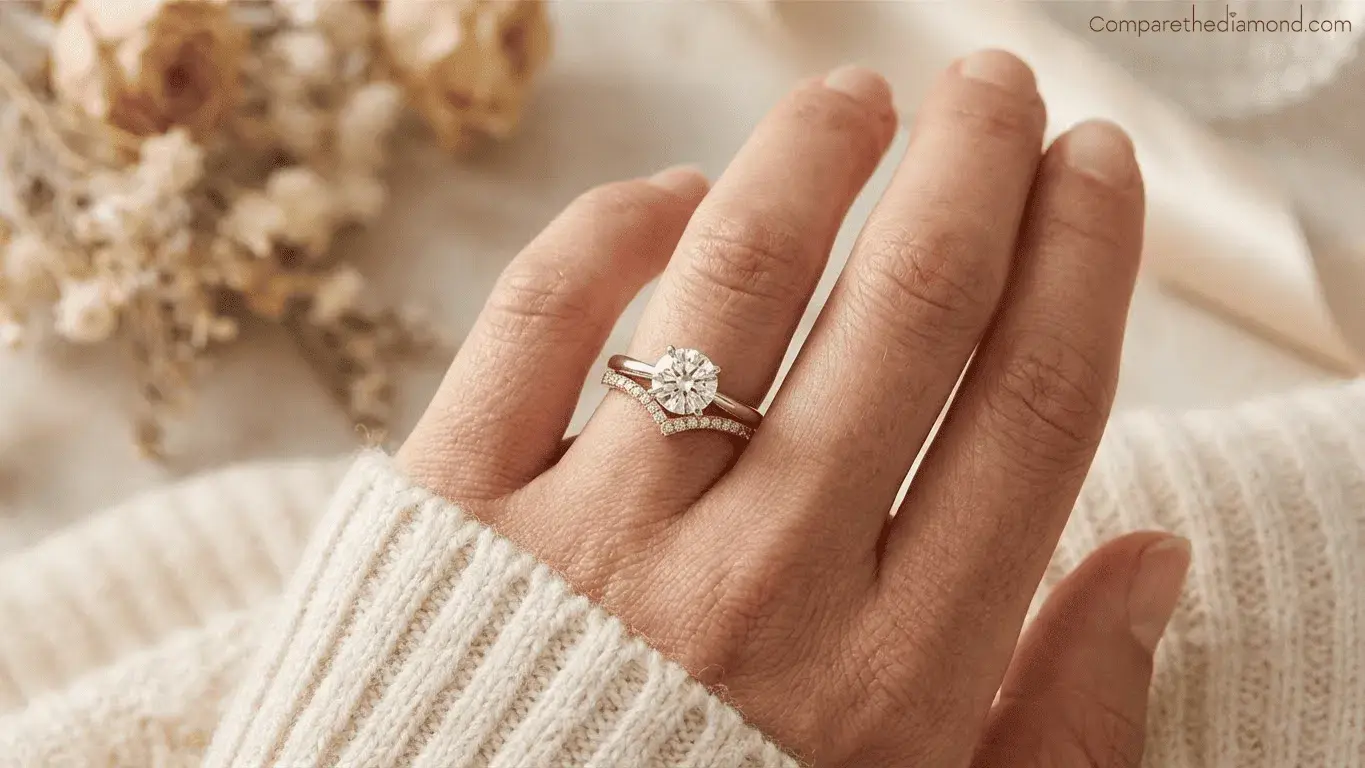
The second reason is comfort. Rings that don’t sit well together can shift, rub, or feel bulky over time. A fitted design reduces that awkward movement and helps the two rings wear like a single unit.
The third reason is personal meaning. Many engagement rings are tied to family history, and heirloom designs don’t always pair well with modern straight bands. A fitted wedding ring lets you respect the original ring while adding something new that still belongs.
Finally, a fitted band gives you more design freedom. You can keep it plain and minimal, add diamonds, include gemstones, or mirror design elements from the engagement ring. The fitted shape becomes the foundation, and the style becomes your choice.
Can a Fitted Wedding Ring Be Worn on Its Own?
Yes, and this is an important point because life isn’t always “stacked rings every day.” Some people wear only their wedding band while travelling, working, or simply on days they want something lighter.
A gently curved fitted band or wishbone style often looks completely natural worn alone. More complex jigsaw styles can still look stunning, but they’re more clearly designed to nest with another ring. If wearing the band alone matters to you, the design should be planned with that in mind so the band looks complete on its own.
Will a Fitted Wedding Ring Sit Flush With My Engagement Ring?
In most cases, that’s the whole goal. Flush fit means the band sits close to the engagement ring without a gap and without pushing against the setting. Whether it can sit perfectly flush depends on the engagement ring’s shape, height, and side details. Some rings need a subtle contour. Others require a more engineered fit.
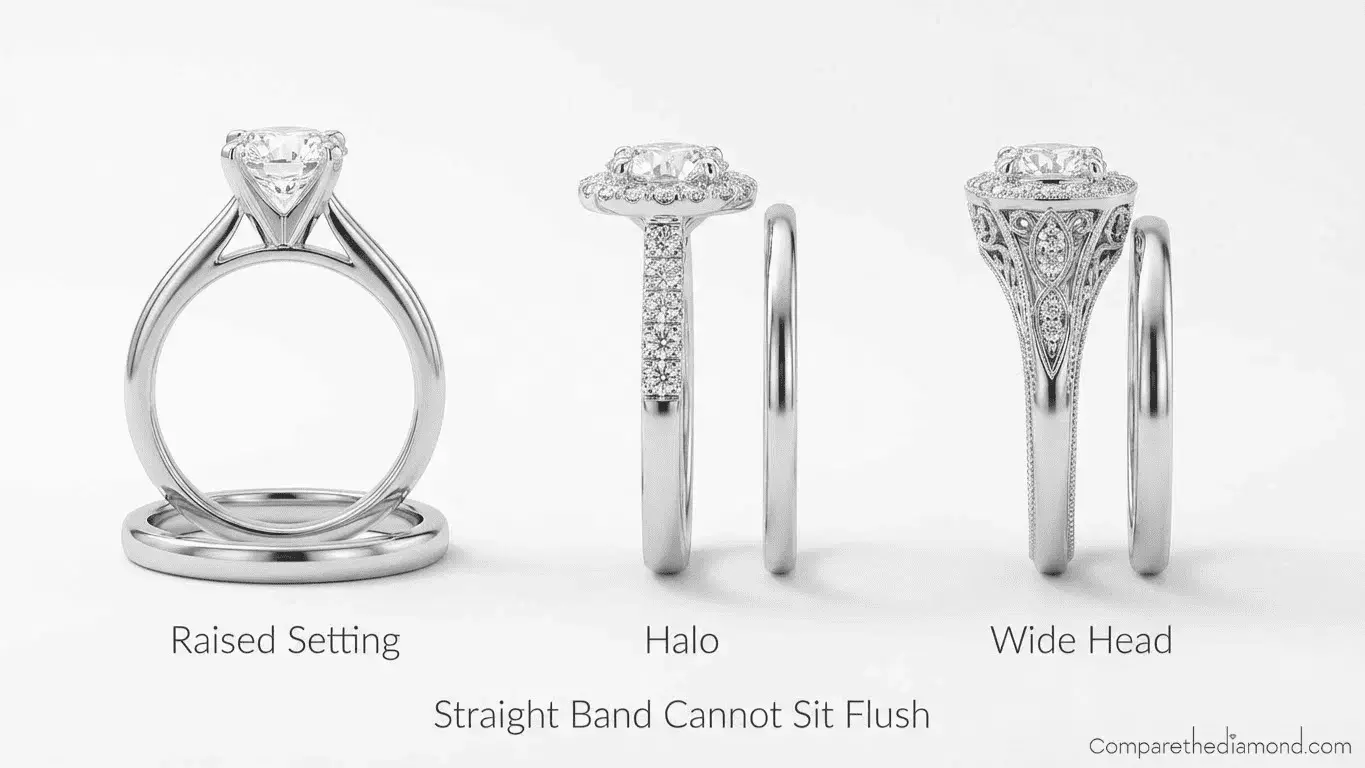
The best approach is always to design the wedding band around the exact profile of the engagement ring rather than guessing based on general shape categories.
How a Fitted Wedding Ring Is Designed to Match an Engagement Ring
A fitted wedding ring design starts with understanding the engagement ring’s structure. The key is not only the top view, but the side profile where the band meets the setting. The designer maps the space that the wedding band needs to occupy so the rings sit together neatly and comfortably.
A template or model is often used to ensure accuracy. This makes it possible to create a wedding band that fits precisely without leaving the engagement ring away for long periods. The end result is a band that looks like it belongs there because it was designed for that exact ring, not “close enough.”
Key Takeaways Before You Choose
If your engagement ring has a raised setting, a halo, or a wider head, a fitted wedding ring is usually the cleanest way to create a seamless pair. The style you choose should match both the ring’s structure and your personal taste, whether that’s classic, minimal, or diamond-set.
Most importantly, a fitted band should feel intentional. The goal isn’t only to remove the gap. It’s to create a set that looks balanced, feels comfortable, and stays beautiful long after the wedding day.
If you want, paste your page’s current version (or the URL text), and I’ll “set” it exactly for your website format, including a stronger intro hook and more keyword-ready headings,still fully informational.