
Thinking of buying a diamond? You've likely heard a few things about them—some true, some not so much. From the idea that all diamonds are the same to the notion that bigger is always better, there are a lot of misconceptions out there. At CompareTheDiamond.com we like to separate fact from fiction and uncover the truth behind some of the most common diamond myths.
Myth 1: Bigger is Always Better.
Fact: While a larger diamond can certainly be impressive, size isn't the only thing that matters. The cut, colour, and clarity of a diamond all play a crucial role in its overall beauty and value. A smaller diamond with an exceptional cut can have more fire and brilliance than a larger, poorly cut stone. It's the unique combination of the "4Cs" (carat, cut, colour, and clarity) that truly determines a diamond's sparkle and value.
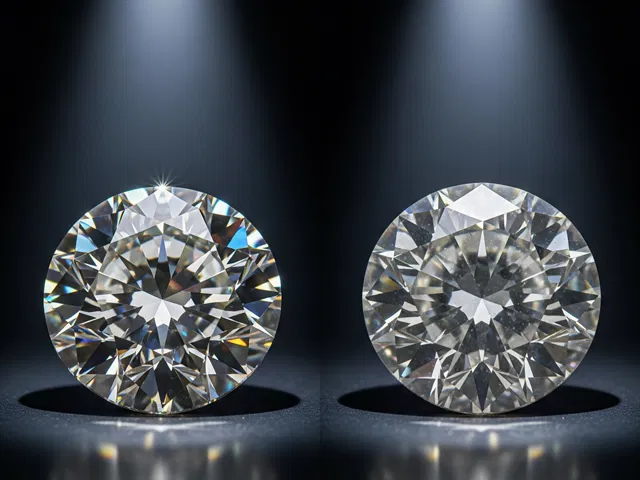
Myth 2: All Diamonds Are Alike.
Fact: No two diamonds are exactly alike! Each one is a unique creation of nature, with its own internal characteristics (inclusions) and external features (blemishes). These tiny imperfections are what make each diamond one-of-a-kind. Additionally, the way a diamond is cut is a major factor in its appearance. A master craftsman can transform a rough stone into a dazzling gem, while a poor cut can make even a large diamond appear dull.
Myth 5: Lab-Grown Diamonds are "Fake" or not "Real" Diamonds.
Fact: This is one of the biggest and most misunderstood myths in the jewellery industry. Lab-grown diamonds are not diamond simulants (like cubic zirconia or moissanite). They are optically, chemically, and physically identical to mined diamonds. The only difference is their origin. They are made of crystallised carbon, have the same brilliance and hardness, and are graded by the same gemological laboratories. The term "lab-grown" simply refers to the controlled environment in which they are created, replicating the natural process in a fraction of the time.
Myth 4: Diamonds Are Indestructible.
Fact: Diamonds are the hardest natural substance on Earth, but that doesn't mean they can't be damaged. They are very hard, but not "tough." A sharp blow can still chip or break a diamond, especially around the girdle (the outer edge). This is why it's important to be mindful when wearing diamond jewellery during activities that could expose it to a hard impact. Regular cleaning and care will also help keep your diamond looking its best.

Myth 3: You Have to Spend Two Months' Salary on a Diamond Ring.
Fact: This is one of the most persistent myths, and it's simply a marketing concept from a past era. The amount you spend on a diamond is a personal decision that should be based on your budget and what feels right for you. A diamond's beauty isn't measured in its price tag. The most meaningful ring is the one that you love and that fits comfortably within your financial plan.
Myth 6: All Diamonds Sparkle the Same Way.
Fact: The type of sparkle a diamond has is directly related to its cut. The way a diamond's facets are arranged and polished determines how light enters and exits the stone. This is what creates the different types of sparkle:
- Brilliance: The white light flashes you see.
- Fire: The rainbow-colored flashes.
- Scintillation: The sparkle you see when the diamond or the light source moves.
A well-cut diamond will maximize all three, creating a dazzling display of light.
Choosing Your Diamond
By understanding these facts, you can approach your diamond purchase with confidence. Focus on the characteristics that matter most to you and your personal style, and you'll find a beautiful piece that you will truly cherish.