
Diamonds usually enter a person’s life through romance and celebration. A ring marks a proposal, earrings become a gift, and a pendant turns into a memory you can actually wear. But there’s another world where diamonds aren’t chosen for sentiment at all. They’re chosen to create a reaction. In that world, the damien hirst diamond skull is one of the clearest examples of how diamonds can move from jewellery into culture, art, and controversy.
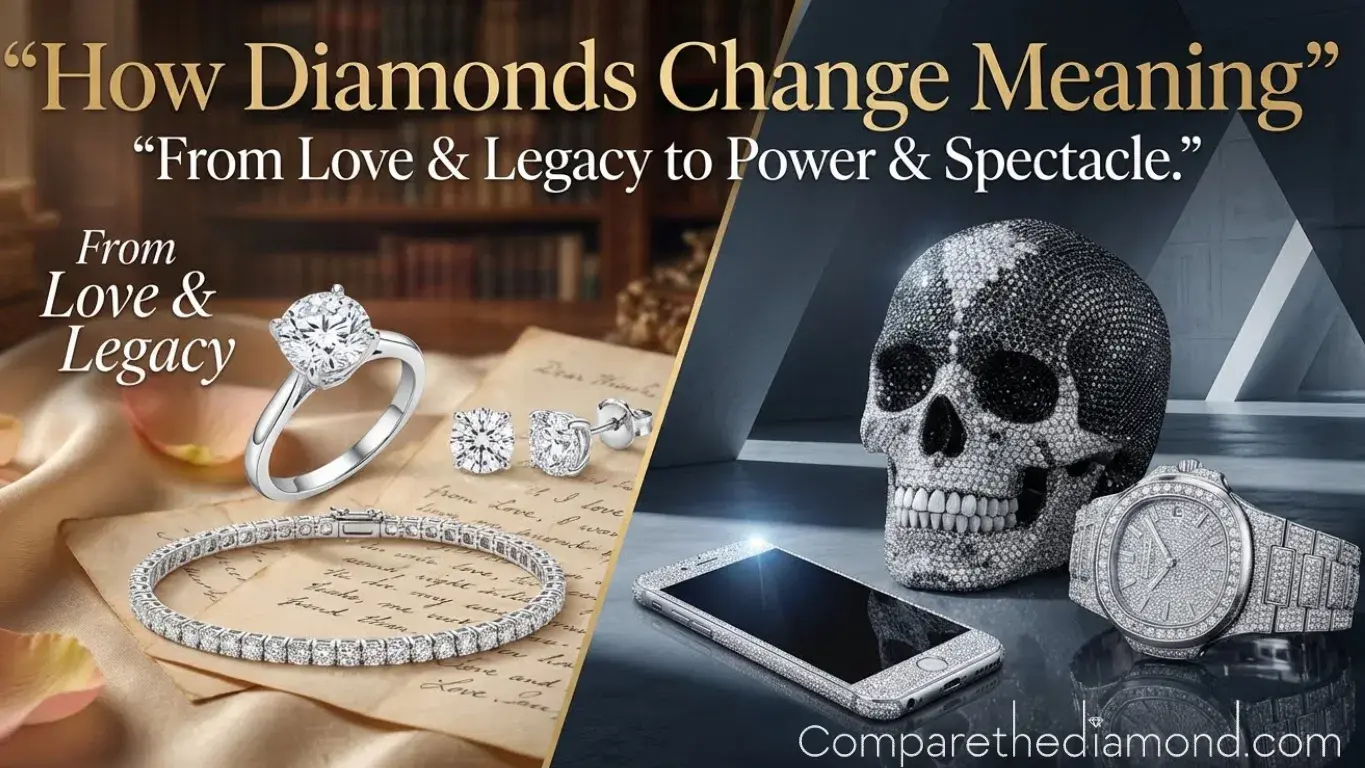
The reason this piece still pulls attention isn’t only its cost. It’s the story it tells without speaking. A skull is normally a reminder of time and mortality. Covering it in diamonds flips that meaning into the opposite direction: permanence, obsession, and the idea that luxury can make even the darkest symbols feel untouchable. Once you understand that shift, the rest of “diamond decorations” start to make sense. They aren’t trying to be practical. They’re trying to be unforgettable.
Are Swarovski Crystals Real Diamonds or Just Crystal Imitations
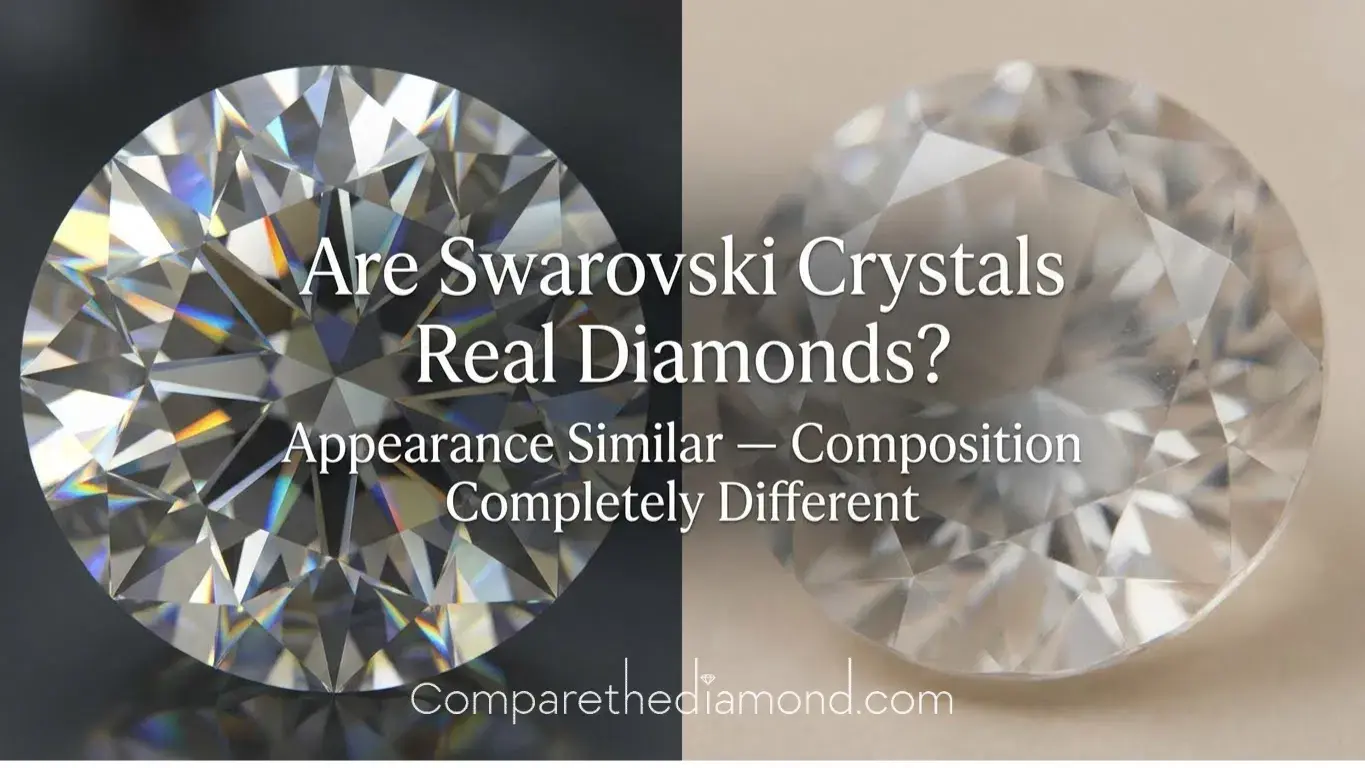
Sparkle can be deceptive, especially online. A quick photo or a short video makes crystals and diamonds look more similar than they truly are, which is why one question keeps showing up: are swarovski crystals real diamonds?
They aren’t. Swarovski crystals are precision-cut crystals designed to reflect light brilliantly, but they are not diamonds. The difference is more than a label. Diamonds have a distinct composition, much higher hardness, and a rarity that contributes to long-term value. Swarovski crystals can look beautiful, but they don’t behave like diamonds over time, and they don’t carry the same market value.
This matters in the real world because “diamond-like” language gets used loosely. A product can be described as “diamond style” or “diamond look” and still feature crystals. If you’re reading about luxury objects covered in sparkle, the first step is always to separate appearance from material reality.
What Drives the Diamond iPhone Price in Ultra Luxury Gadgets
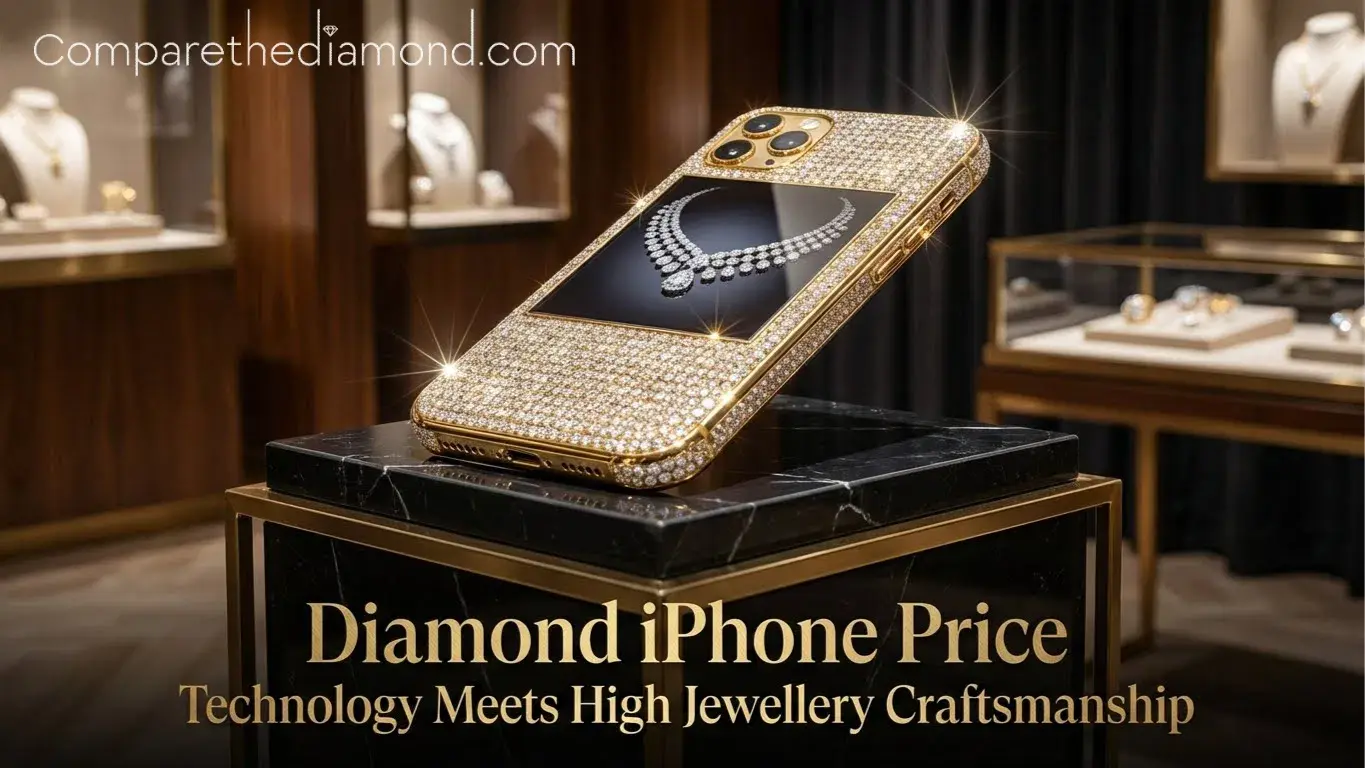
A diamond ring feels normal. A diamond phone feels like a plot twist. That’s why the search for diamond iphone price is so common. People aren’t just looking for numbers. They’re trying to understand why anyone would take a device that changes every few years and treat it like a museum piece.
The answer is that these products aren’t priced like technology. They’re priced like luxury craftsmanship. The value sits in the gold body, the number and quality of stones, the hours of setting work, and the fact that the item is made to be rare. When diamonds cover a phone, function becomes secondary. The phone becomes a statement object, designed to show status and individuality in the most modern way possible.
And interestingly, this is where diamond culture becomes very human. People don’t buy these items because they “need” them. They buy them because luxury often isn’t about need. It’s about identity, attention, and the feeling of owning something most people will never even hold.
Diamond Encrusted Meaning Explained for Luxury Items and Jewellery
If you want to understand diamond decorations properly, you need to get clear on the diamond encrusted meaning. In simple terms, it describes an object that is covered with diamonds across a wide surface area, usually set close together so the sparkle looks continuous rather than scattered.
But the real meaning goes deeper than coverage. True diamond encrusting implies craftsmanship. Stones must be secured in metal using reliable setting methods so they don’t loosen with time. That’s why two “diamond-encrusted” items can look similar in photos but be completely different in quality. One might be built to last. The other might be built only to look impressive for a moment.
That’s also why the phrase shows up in both jewellery and luxury objects. A pavé-style ring and a diamond-covered accessory share the same visual goal: uninterrupted brilliance. The difference is simply where the technique is applied.
What Does Diamond Encrusted Mean in Real Craftsmanship Terms
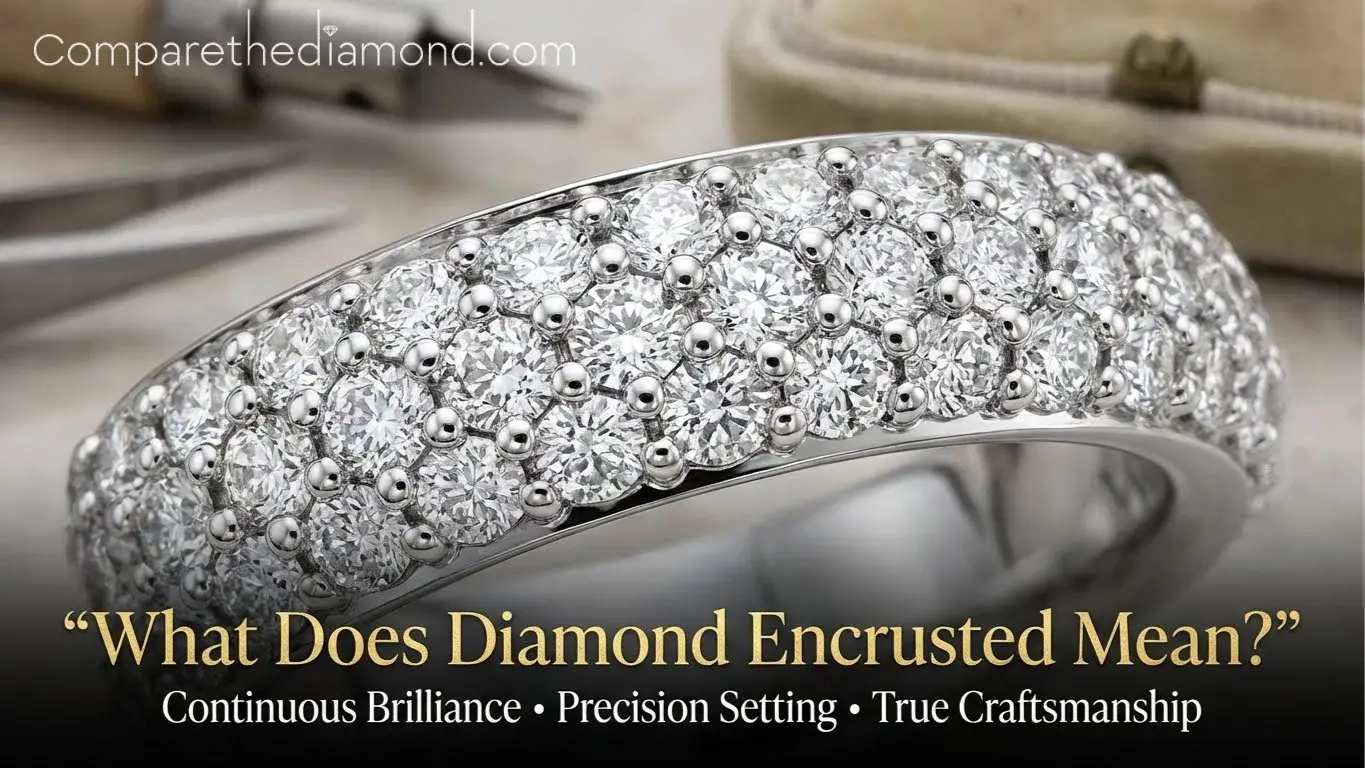
When someone asks what does diamond encrusted mean, they’re often trying to picture how diamonds are attached. In real craftsmanship terms, it usually involves diamonds being placed tightly together and held securely by metal. The setting must be consistent, the stones must be aligned well, and the surface must be engineered so light can still interact with the diamonds properly.
This is where the “wow” factor is actually earned. A diamond-encrusted surface only looks luxurious when the work is clean. If placement is uneven or settings are weak, the piece can look messy, and worse, it can lose stones. In fine jewellery, that’s why reputable craftsmanship matters so much. Beautiful sparkle is one thing, but secure sparkle is what separates real quality from a short-lived shine.
Why a Diamond Encrusted Toilet Became a Symbol of Extreme Bling
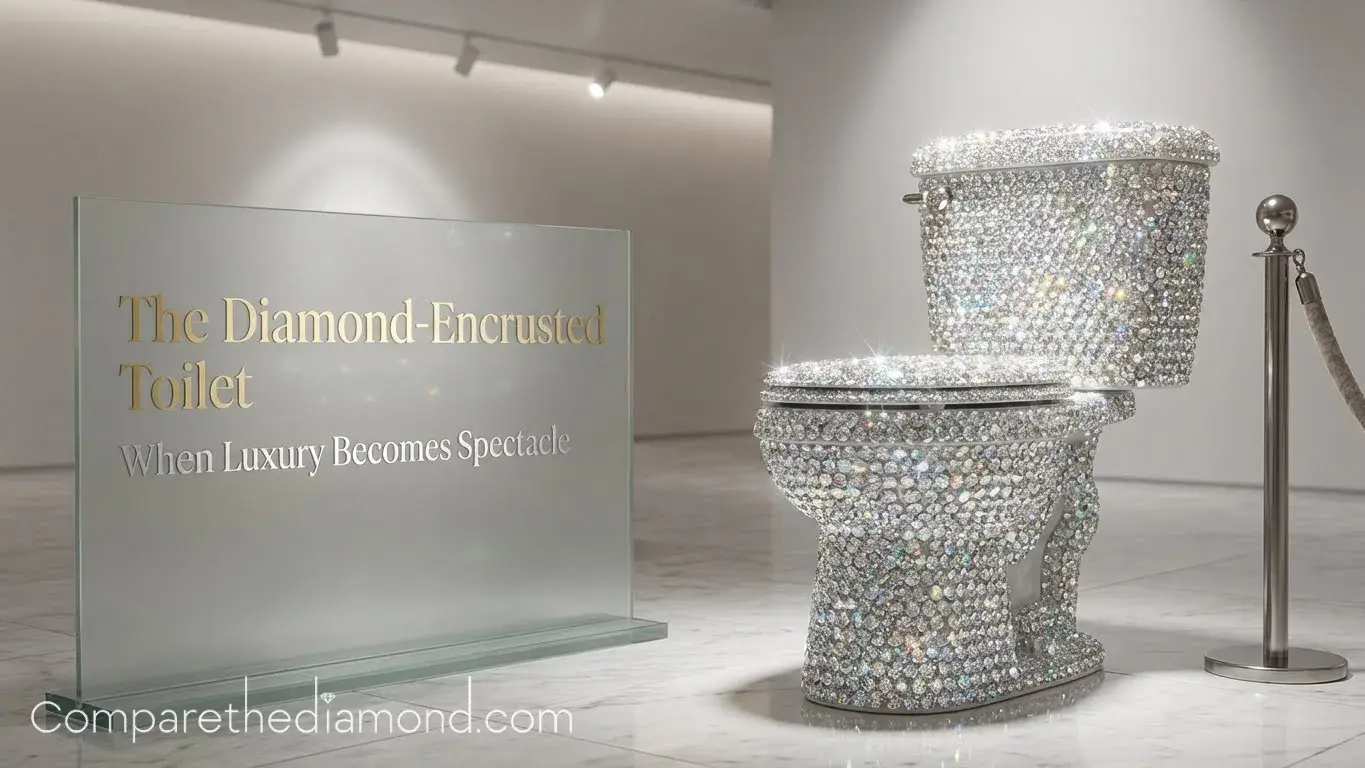
Some luxury stories go viral because they feel almost unreal, and diamond encrusted toilet is one of those phrases that instantly grabs attention. It represents a point where decoration becomes pure spectacle. When diamonds are imagined on a toilet, the goal is no longer elegance. The goal is shock, conversation, and a kind of “how far can luxury go” curiosity.
It’s also the perfect example of why material truth matters. Many headline-making “bling” toilets are crystal-covered rather than diamond-covered, because crystals create sparkle without the astronomical cost. But the cultural idea remains the same: turning something ordinary into something absurdly luxurious, simply because it can be done.
That’s why this topic fits so naturally inside diamond decoration conversations. It’s less about bathroom design and more about how luxury objects are sometimes created as symbols rather than tools.
How These Stories Change the Way We Look at Diamonds
The most interesting part of these examples is what they reveal about diamond meaning. In jewellery, diamonds often represent love, commitment, and tradition. In spectacle items, diamonds represent power, attention, and extremes. Both uses are real. They just serve different purposes.
And for everyday readers, these stories actually provide something useful. They sharpen your understanding of materials, craftsmanship, and value. They teach you not to confuse sparkle with diamonds, and not to confuse the label “encrusted” with real setting quality.
Because in the end, whether diamonds are used in art, on gadgets, or in jewellery, the same truth remains: the most impressive diamond pieces aren’t the ones that shout the loudest. They’re the ones where the details hold up when you look closely.