
When it comes to choosing rings for your relationship journey, few decisions feel as meaningful as selecting an engagement ring and a wedding band. While these rings are often worn together, they serve different purposes and carry distinct symbolism. Understanding the difference between engagement rings and wedding bands helps you make confident, thoughtful choices that reflect both your style and your story.
This guide explains what each ring represents, how they differ, and how to choose designs that work beautifully together.
What Is an Engagement Ring?
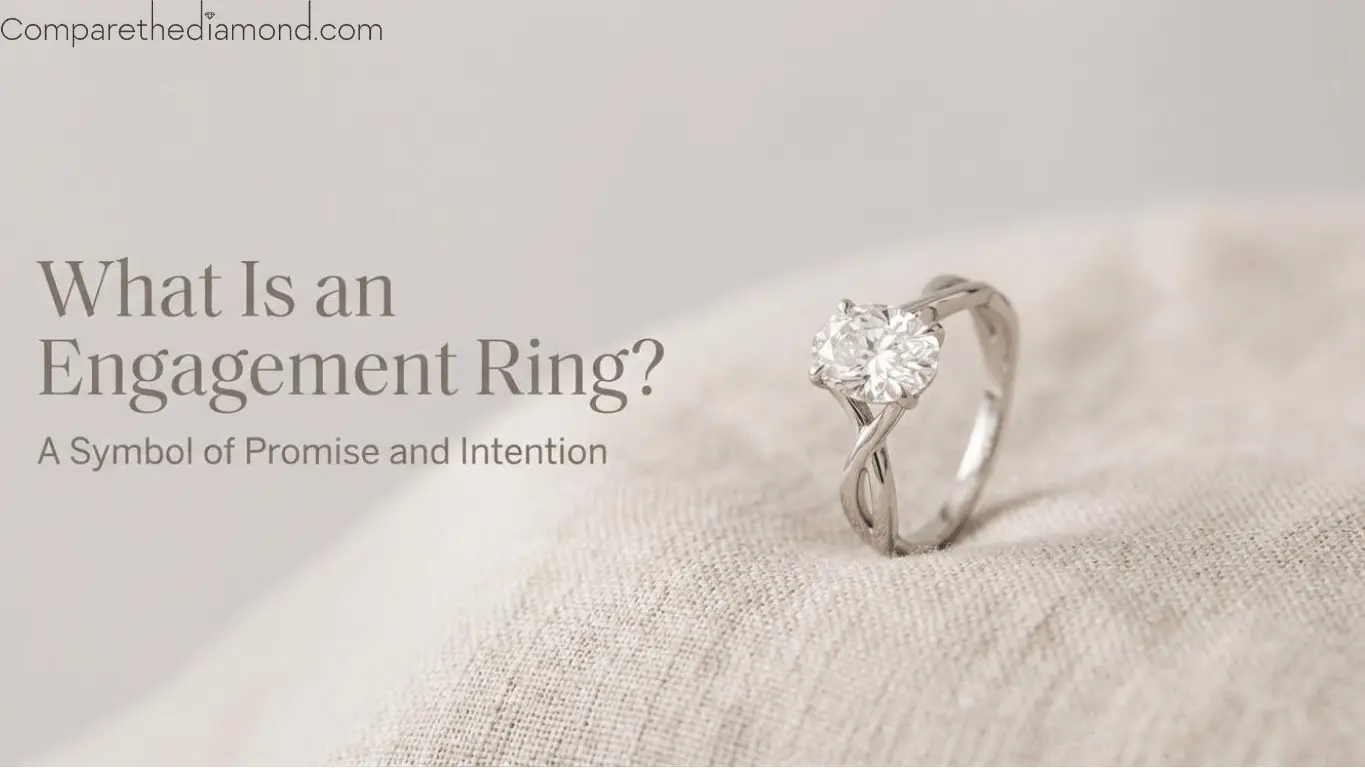
An engagement ring is traditionally given at the time of a proposal. It symbolises the promise of marriage and the intention to spend a life together. Because of its significance, the engagement ring is often more elaborate in design and typically features a centre stone, most commonly a diamond.
Over time, engagement rings have evolved to reflect personal taste rather than strict tradition. While classic solitaires remain popular, many couples now choose halo settings, three-stone rings, or unique designs featuring coloured gemstones. What matters most is that the ring feels personal and meaningful to the wearer.
What Is a Wedding Band?
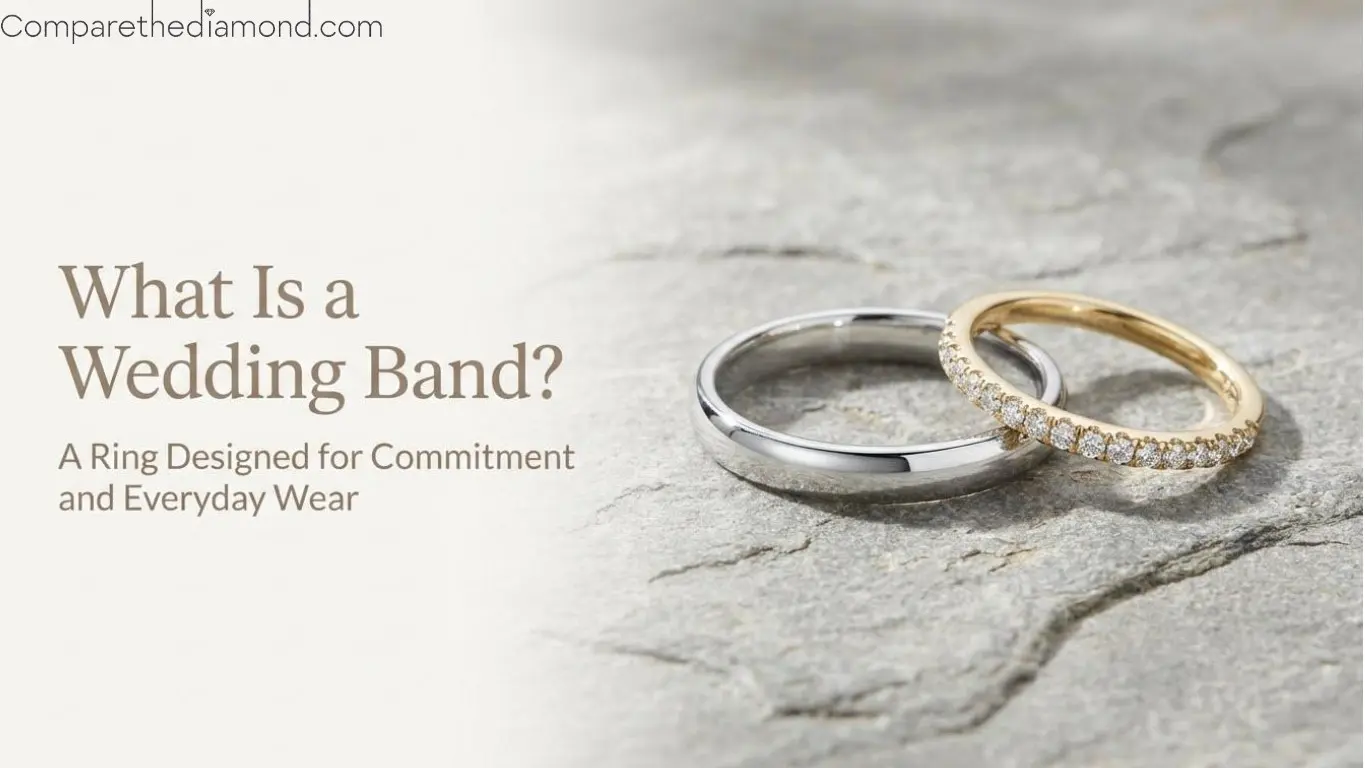
A wedding band is exchanged during the marriage ceremony and represents commitment, unity, and permanence. Traditionally simpler in design, wedding bands are designed for everyday wear and comfort.
Wedding bands can be plain or diamond-set, matching or contrasting with the engagement ring. Some couples choose identical bands, while others select styles that reflect individual preferences. Unlike engagement rings, wedding bands are often worn continuously, making comfort and durability especially important.
Engagement Ring vs Wedding Band: Key Differences
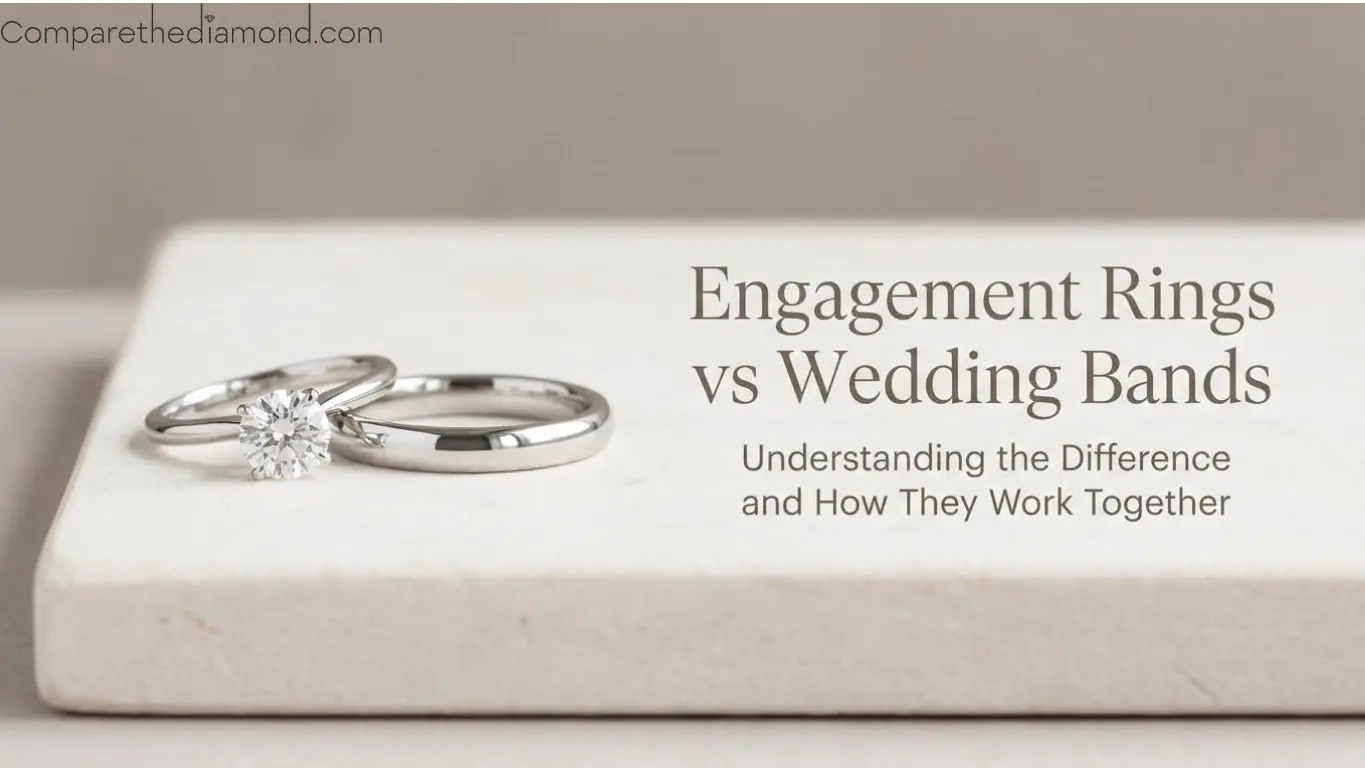
Although they’re closely connected, engagement rings and wedding bands differ in purpose, design, and timing.
The engagement ring is usually given at the proposal and symbolises a promise. It often features a centre stone and stands out visually.
The wedding band is exchanged at the ceremony and symbolises lifelong commitment. It’s usually simpler and designed for daily wear.
Many people wear both rings together on the same finger after marriage, while others choose to wear them separately depending on lifestyle and comfort.
Popular Engagement Ring Styles Explained
Engagement ring styles have expanded significantly, giving couples more freedom than ever to choose something that reflects their personality.
Solitaire rings remain timeless, featuring a single centre stone that highlights the diamond’s brilliance. Halo rings add extra sparkle by surrounding the centre stone with smaller diamonds, while three-stone rings represent the past, present, and future of a relationship. Vintage-inspired designs, with intricate detailing and milgrain edges, appeal to those who love character and history.
Each style offers a different look, but the best choice is always the one that feels right for the person wearing it.
Wedding Band Styles to Know
Wedding bands are no longer limited to plain metal rings. Today’s designs range from sleek and minimal to bold and decorative.
Some couples prefer classic polished bands for their timeless simplicity. Others choose diamond-set bands for added sparkle or textured finishes for a modern edge. Matching wedding band sets are popular, but many people enjoy mixing styles to create a more personal look.
The key is choosing a band that feels comfortable and complements your engagement ring, whether through matching metal, shape, or design details.
How to Choose the Perfect Engagement Ring and Wedding Band Pair
Choosing rings that work well together is about balance. Some engagement rings are designed with matching wedding bands, while others require a custom fit to sit flush.
Consider how the two rings will look when worn together every day. Metal type, band width, and setting height all play a role. A well-matched pair should feel cohesive without overpowering each other.
Lifestyle also matters. If you’re active or use your hands frequently, lower-profile designs and smooth edges can make daily wear more comfortable.
Tips for Stacking Engagement Rings and Wedding Bands
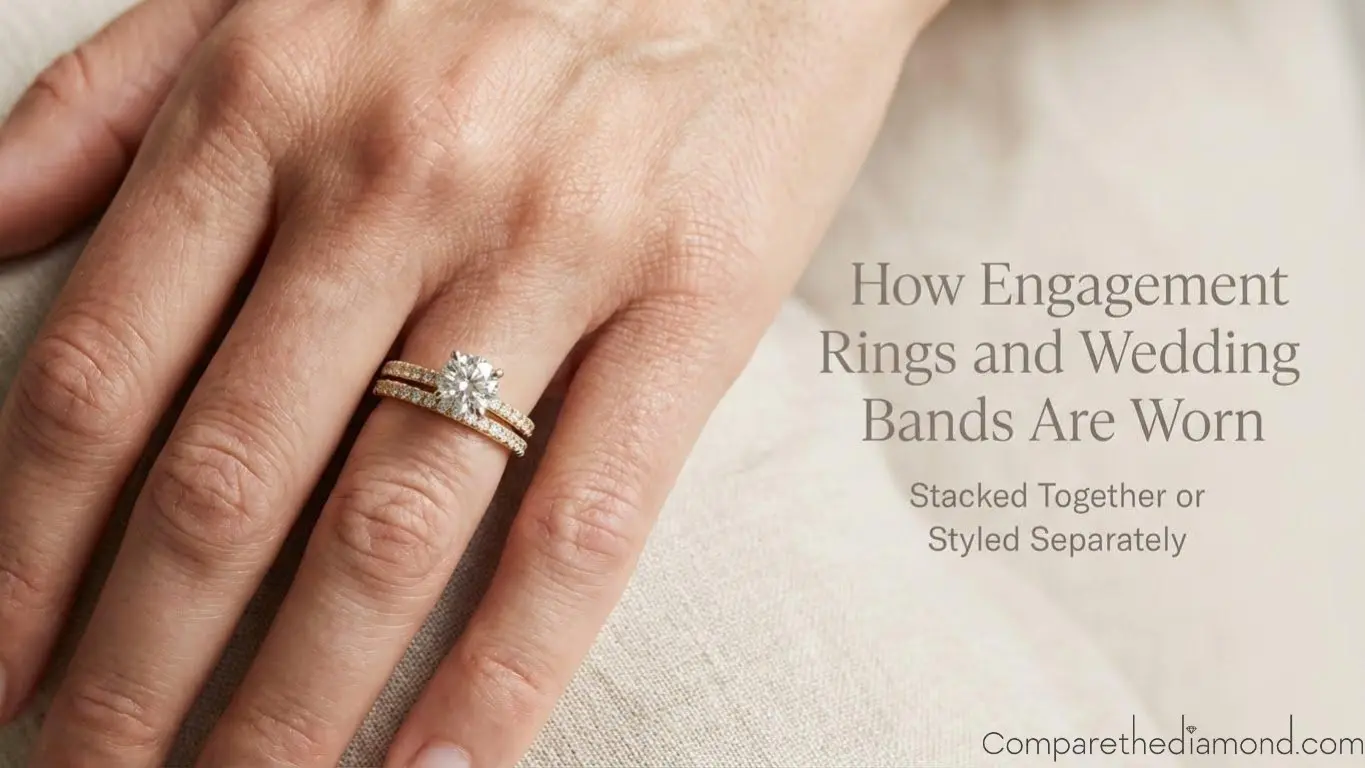
Stacking rings has become a popular way to personalise your jewellery. While there are no strict rules, a few guidelines can help create a balanced look.
Many people wear the wedding band closest to the heart, followed by the engagement ring. Mixing textures or adding a slim spacer band can add depth without overwhelming the set. Matching metals create a seamless look, while mixed metals can feel modern and expressive when styled intentionally.
The best stacks feel natural, not forced, and reflect your individual style.
The Meaning Behind Engagement Rings and Wedding Bands
Beyond their beauty, these rings carry emotional meaning. Engagement rings represent intention, excitement, and the beginning of a shared future. Wedding bands symbolise unity, continuity, and commitment through all of life’s changes.
Understanding what engagement rings mean and what wedding bands represent helps couples choose designs that feel emotionally resonant, not just visually appealing.
Final Thoughts
Engagement rings and wedding bands are more than jewellery. They mark milestones, celebrate love, and become part of your everyday life. Whether you choose classic designs or something more unique, the most important thing is that your rings feel personal, comfortable, and meaningful.
At ComparetheDiamond.com, we help couples navigate every step of this journey, from understanding ring styles to creating bespoke designs that reflect your story. With expert guidance and carefully crafted jewellery, finding the perfect engagement ring and wedding band becomes a joyful experience rather than a confusing one.